
MAPLE RIDGE · NOISE, FAN AND HEAT CONCERNS
Fireplace Repair Maple Ridge: ask Efficient Heating Service about a new rattle, a circulating fan that has stopped or heat that no longer reaches the room as it did. Explain when the change happens and give your model if known. We can discuss assessment, parts compatibility and the current charge before you approve work. Phone 778-798-4343 or send an enquiry.
Updated October 3, 2026
Fireplace Repair Maple Ridge: match the sound to the moment
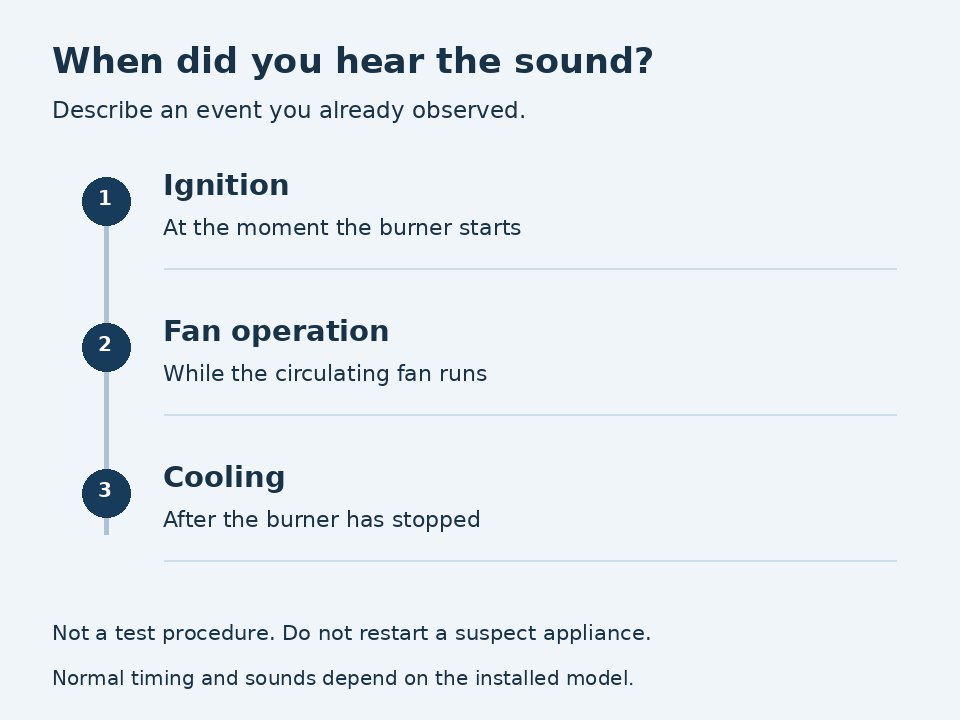
When a gas fireplace becomes noisy, the timing matters as much as the sound. Describe whether it happens at ignition, during fan operation or while the appliance cools. Efficient Heating Service can discuss an assessment that distinguishes a circulating-fan complaint from a burner, control or mounting concern.
A hum, vibration or mechanical rattle
A steady fan sound and a new vibration are different reports. Explain whether the noise changes with the ordinary fan setting you have already used. A rattle may involve a loose fitting, contact between components or the fan assembly. Its location alone does not prove the motor needs replacing.
If the noise began after cleaning or other work, mention that event. Supply the earlier work record when available. Do not press on a hot faceplate, reach into the fan compartment or apply lubricant to try to quiet the appliance.
Ticking during warming or cooling
Some manufacturer manuals describe expansion and contraction sounds as normal operating characteristics. That does not make every newly reported sound normal. Tell us whether it is familiar, has become louder or occurs with a change in ignition, flame or heat delivery. The model and the complete complaint need consideration together.
An existing recording can help describe an intermittent noise. Note where you stood and what the appliance was doing. A recording is useful context for the visit; it cannot establish safe operation or identify a component by itself.
A bang or an unusually forceful ignition
Explain an ignition event separately from fan noise. Keep the unit off if you suspect delayed or abnormal ignition and arrange professional assessment. Do not keep attempting starts to capture a better video. A fault that occurs before the circulating fan runs should not be dismissed as a blower complaint.
Report any accompanying odour, soot, broken glass or shutdown at the beginning of the call. Those details change how the enquiry should be handled. A quieter fan setting does not address an ignition problem.
You do not need technical vocabulary to describe a sound. “It rattles from the lower front after the fan begins, and the noise was not there last winter” is useful. A description of the sequence helps narrow the visit without turning an owner’s observation into an unsupported parts diagnosis.
The flame works, but the fan does not: what to establish first
A working burner does not confirm that the circulating fan is fitted, powered or being commanded to run. Some fans start after a delay or temperature change. Identify the model, previous fan behaviour and current complaint before assuming a failed motor. The installed controls determine which observations are useful.
Tell us whether this fireplace previously moved air with a fan. An icon on a handset or a grille on the front is not enough to confirm the accessory. If you inherited the appliance with the home, look for the fan’s description in the owner records rather than assume it is missing or broken.
Describe a lost function: no fan sound, no noticeable airflow at the usual outlet, one setting that stopped working or a new intermittent response. If the fan still runs but the room feels cooler, explain that separately. A heat-delivery complaint can extend beyond the fan.
A documented delay can be part of normal operation. A fan that used to start and now remains inactive under comparable normal use deserves a different enquiry. Do not bypass a temperature control to test it, or assume every fireplace should use the same start and stop timings.
Before an order, the assessment should establish whether the complaint involves the supply, a controller, a temperature-operated switch, connections or the fan itself. Those components do different jobs. A new motor will not correct an unrelated interruption to its electrical supply.
Leave electrical measurements, internal wiring and component isolation to the service visit. If a breaker repeatedly trips or there is a burning electrical smell, report it and keep the affected appliance out of use. Repeated resets can hide an important part of the fault history.
Is this a fireplace fault or a change in how the room receives heat?
A room can feel cooler even when a gas fireplace lights normally. Explain whether the change involves the flame, fan, usual warm-air outlet or the room itself. Assessment should separate lost appliance performance from an expectation about heating a different space. A larger fan is not an automatic answer.
Something the fireplace did before has changed
Examples include a previously working fan that no longer starts, a burner that stops earlier or less airflow from the outlet you normally used. Describe the loss and the circumstances in which you noticed it. A comparison with the appliance’s own history is more useful than a comparison with another household’s fireplace.
The room or heating expectation has changed
Opening the living room to another space, changing furnishings or expecting warmth upstairs can alter what you want from the fireplace. Tell us about the renovation or new use of the room. Repairing a working accessory does not establish that the appliance can heat a larger area.
Describe the room you intend to warm rather than request the strongest available blower. Appliance design, a supported heat-management arrangement and the room layout need consideration. Do not cover an outlet or divert its air with an improvised duct.
A circulating blower moves room air around the appliance’s heat-exchange surfaces. It does not replace the gas burner or create a new heating capacity by itself. A complaint about heat reaching the seating area should still be connected to the fitted model and its supported accessories.
If you are deciding between repair and changing the appliance, keep the two proposals clear. Restoring a failed function is one scope. Selecting a different fireplace for changed room requirements is another. Our fireplace installation information supports that replacement discussion.
Local brand references: Regency, Enviro and Napoleon
Regency and Enviro appear in Maple Ridge showroom offerings, while Napoleon is available through regional suppliers serving the city. These references help make a model-specific enquiry. They do not measure which brand has the most installations. Describe your fitted appliance and accessory rather than order from a brand name alone.
A temperature-operated fan is not an instant-start promise
Regency’s E33 documentation describes an automatic convection fan that responds as the appliance warms and cools. A pause after lighting or continued fan operation after the burner stops can be part of that arrangement. Establish whether that document applies to your exact model and revision.
For an E18, E33, Gi-series insert or another Regency appliance, give the full identity. Similar-looking fronts do not establish the same blower, switch or controller. You can also review our Regency gas fireplace repair page before contacting us.
The Q1 suffix matters when identifying fan controls
Enviro’s Q1L owner document lists a convection fan, a fan-temperature sensor and a fan controller as separate components. The Q1LI document identifies a different electronic control arrangement. Copy the complete model designation from your records; “Q1” on its own can leave an important distinction unresolved.
A fan symptom should lead to testing the relevant components, not replacing every item in a parts list. The manufacturer reference establishes what belongs to that documented model. Current compatibility, supply and the condition of your installed appliance still need confirmation.
Identify a blower and a heat-management system separately
Napoleon describes internal blowers and other heat-management options across its fireplace range. Those are different arrangements. Say whether your unit has an electric circulating fan, a documented heat-management installation or neither. The accessory name helps prevent a heat complaint from becoming a generic motor order.
A retrofit should use an option supported for the specific appliance. Its access and installation requirements can matter as much as the accessory price. If you are unsure what was fitted, provide the original installation record or a safe photograph of the fireplace and visible outlets.
These are identification examples, not a claim that Efficient Heating Service is a manufacturer-authorized dealer or that a particular component is in stock. Tell us about another make when arranging your assessment. Your neighbourhood does not determine which brand is installed in your home.
4 repair paths before you replace a noisy fireplace blower
A noisy or inactive blower can lead to several different repairs. The motor assembly, mounting arrangement, operating controls and electrical supply deserve consideration. Fireplace Repair Maple Ridge enquiries should ask which finding supports the proposed work. Approve the component and fitting scope after the diagnosis, rather than from sound alone.
1. Fan assembly and its moving parts
The assessment may identify a motor or fan-wheel problem, or the supported replacement may be a complete blower assembly. Ask what is being supplied and whether it is intended for the appliance. A matching overall length does not establish electrical, mounting or performance compatibility.
2. Mounting, contact and associated hardware
A vibration can involve the way an assembly is supported or contact with another component. A loose faceplate and a worn motor are different findings. Have the proposal explain the source of the vibration before spending on an entire fan.
3. Speed control, temperature switch or electronic fan command
The mechanism that starts or varies the fan depends on the design. A manual speed controller, a temperature-operated switch and an electronic command are not the same part. Tell us whether the problem concerns all settings or only a function that previously worked.
4. Supply, wiring and connections
An inactive assembly may need investigation of its electrical supply or related connections. Report an outage, earlier electrical work or a repeated trip if it preceded the complaint. Do not assume burner operation has confirmed the fan’s supply.
Choose the appointment details that fit your building
The fireplace format and access arrangements help define the assessment. A masonry insert, a built-in appliance and a freestanding stove can have different fan access. Share the building type, finish around the opening and who can approve the work. A small accessory does not always mean a simple removal.
An insert inside an existing fireplace opening
Send a view that includes the trim and surrounding hearth. Mention a fitted mantel, stonework or an older installation whose records are missing. The technician needs to establish the supported access route before assuming a blower can be reached through the front. Do not remove the insert or its gas connection yourself.
A built-in unit in a detached home or townhouse
Explain whether the appliance has a decorative face, a visible outlet above it or a heat-management arrangement elsewhere. Tell us about work that changed the finish around the fireplace. Access to a supported accessory can depend on what was installed and how the enclosure was completed.
A suite in a shared building
Give the suite designation and entry procedure, and confirm who authorizes the assessment. Describe the complaint as internal fan noise, an ignition issue or a concern with another location. If investigation extends to common property, check the building process for that additional access and approval.
A stove or fireplace on a rural property
Identify the room, property entrance and recorded fuel. Include a separate model for each appliance if more than one needs attention. A rural address does not establish propane use, and a fan fitted to one stove does not identify the accessory in another.
Clear the normal approach to the fireplace and explain any lifting or finish-access concern in advance. Keep owner documents and earlier repair invoices available. Ask about cooling the particular appliance before attendance; do not run a unit with a reported safety concern simply to demonstrate the sound.
Maple Ridge neighbourhoods: information that helps plan your visit
Include your neighbourhood with the full address when enquiring about availability. Maple Ridge has historic centres, growing residential areas and rural properties. Each appointment still needs its own building and appliance details. Local names help locate the visit; they cannot establish the fan model, fuel or condition inside the home.
Port Hammond
If your fireplace sits in an older opening, describe the fitted insert and surrounding finish. An historic neighbourhood does not mean the appliance is original to the house. Use its records to identify the model and mention any previous replacement.
The Ridge
Give the street address rather than rely on the broader area name. If the noise comes from a second fireplace, identify its room separately. A clear room label helps keep the two appliance histories and possible parts orders apart.
Port Haney
For a multi-unit address, include the suite and entry contact. Explain whether the noise is heard at the fireplace or in another part of the home. The observed location is useful, while the inspection establishes the source.
Haney / Town Centre
Discuss visitor parking and who will meet the technician. A tenant can describe the changed sound while an owner or authorized manager confirms the work. Clarify the purchasing contact before approving any special-order accessory.
Albion / Kanaka
Tell us about a built-in fireplace, townhouse entry or enclosure detail that affects access at your property. Include the complete accessory name if your installation documents list one. Nearby homes can have different configurations even when their fronts look similar.
Cottonwood
Describe whether the concern is fan operation or warmth reaching the living area. Mention a renovation that changed the room. That helps distinguish a lost fireplace function from a request to heat a larger or differently arranged space.
Silver Valley
Identify a documented heat-management system if the fireplace has one. Say which visible outlet is associated with the complaint. Leave concealed ducts and enclosure panels in place; existing installation records can provide context for the assessment.
Yennadon
For a property with several entrances or buildings, provide the approach to the correct residence. State the fuel shown in your records rather than infer it from the setting. Include each fireplace separately if you want more than one assessed.
Webster’s Corners
Give practical access instructions alongside the model and fault description. If the appliance has been unused, mention the length of inactivity. Do not restart it solely to determine whether an earlier noise still occurs.
Thornhill
Explain any driveway or entry arrangement relevant to attendance. A freestanding stove enquiry needs its own identity, just as an insert does. The rural or wooded setting should not become a guess about the fuel or appliance generation.
Whonnock
If a fan once operated and now does not, include that history and any event preceding the change. Photos of the full appliance can support an initial discussion without opening it. Ask about appointment availability for your exact address.
Ruskin
Confirm the property entrance and the contact who can authorize the visit. If you are close to a municipal boundary, use the full address when booking. A local landmark can assist directions, while the appliance details determine the repair conversation.
The city’s neighbourhood guide and community maps provide the geographic references used here. These appointment notes are prompts for the actual property, not assumptions that every home in an area has the same fireplace or access.
Ask for a defined repair price and a clear result
Before approving work, ask what the assessment fee covers and how the repair proposal is priced. A blower quote should identify the supported item, access work and control or mounting components. Availability and the expected completion checks belong in the discussion. A parts price alone is not the installed repair.
| Decision | Useful question |
|---|---|
| Diagnosis | What was found, was the reported noise reproduced, and what remains uncertain? |
| Replacement scope | Is the quoted item a motor, complete assembly, controller, switch or mounting component? |
| Access | Does fitting require removal of trim, part of the appliance or another documented access step? |
| Supply | Is the item currently available, and what order or return terms apply? |
| Completion | How will the relevant fan functions and the original complaint be checked after fitting? |
For a noise that comes and goes, ask whether it happened during the visit and what evidence supports the proposal. A normal inspection at one moment should not be presented as proof that an intermittent complaint never occurs. Agree on a practical follow-up if the diagnosis remains incomplete.
For an older fireplace, confirm that a supported part can still be obtained. Ask for the actual replacement reference rather than an assurance that any fan of similar size will fit. If a needed item is unavailable, discuss the options with their limits clearly stated.
A functioning fireplace that needs scheduled cleaning and inspection belongs in a gas fireplace service enquiry. Mention a specific noise or failed accessory when booking so that the assessment scope includes the complaint. Routine care and a defined fault investigation may involve different work.
Owner questions about fan noise, warmth and repair costs
These answers help you prepare a Maple Ridge repair enquiry and understand a proposed fan or noise repair. They cover timing, replacement scope, room heating and charges. Your installed model and the assessment findings still determine the work. Use the questions to clarify the decision before buying an accessory.
My fan starts after the flame. Does that mean it is failing?
Some appliance designs delay fan operation or use a temperature-operated switch. Check the documentation for your fitted model. Report a change from its earlier behaviour rather than compare its timing with another fireplace. A fan that never resumes its previously working function needs a separate assessment.
Why does the fan keep running when I turn the burner off?
Certain controls allow the fan to continue while useful heat remains. The expected stop behaviour is model-specific. Explain if the run-on is new, unusually prolonged or accompanied by another fault. Do not bypass the control simply because the flame has stopped.
Is a new fireplace rattle a reason to replace the whole blower?
A new rattle can involve mounting, contact or a component within the fan assembly. Assessment should locate the source before a complete replacement is approved. Ask which finding supports the proposed part and whether the mounting arrangement is included in the work.
Can a more powerful fan make my fireplace heat the upstairs rooms?
A fan replacement should restore a supported function, not promise a different heating capacity. Explain the space you want to warm and whether the room layout has changed. A larger or different blower must be supported for the appliance, and it may not address the heating expectation.
What if the fireplace is noisy only at its highest fan setting?
Describe the setting and whether the sound is new or familiar. Existing observations can help assess a speed-related complaint. Do not assume that using a lower setting has repaired a developing fault. The inspection should consider the assembly, mounting and applicable control components.
Can I keep restarting the unit to record a bang at ignition?
Do not repeat starts when you suspect an abnormal or delayed ignition. Keep the fireplace off and report what already happened. Include any existing recording, odour or other change. An ignition concern needs its own assessment and should not be treated as ordinary circulating-fan noise.
Will the assessment charge be included in the replacement price?
Confirm that when you arrange the visit. Ask how the initial visit is charged and which costs belong to the approved repair. A supplied component, fitting, extra access work and a return appointment can have different scopes. Use the written proposal to understand the complete cost before ordering.
Can a blower be added if this fireplace never had one?
Check whether the model supports a circulating fan and what its installation requires. An accessory can need electrical supply and significant access. Discuss the supported option and fitting scope before purchasing a generic fan. A visible grille does not establish that a retrofit is available.
What should I send when I am unsure where the noise comes from?
Share the full-front appliance photograph, available model record and a description of when you heard it. Say if the flame or fan was operating and whether another room or outlet was involved. Use an existing recording if available; do not open or restart a suspect unit to produce one.