
Updated: September 29, 2026
Boiler Installation Vancouver: Start With the Right System
A suitable boiler must cover your home’s heating demand and, where required, your household’s hot-water use. Efficient Heating Service assesses those needs alongside the existing pipework, controls and available installation space, then explains the equipment and work included in a project-specific proposal.

Start with the problem you want to solve: unreliable heat, an expensive repair, limited hot water or a renovation. That gives the assessment a purpose beyond choosing a new appliance.
What Determines the Installed Cost?
The installed price reflects both the selected equipment and the work needed around it. Venting, gas supply, drainage, electrical connections and existing heating components can change the scope. Compare written proposals on those details before deciding that two quotes describe the same installation.
Ask each contractor to identify the model, retained equipment, new components, removal arrangements, permits and exclusions. An equipment-only figure is not directly comparable with a complete installation proposal.
On a small screen, swipe the table sideways to see every column.
| Proposal item | What to clarify |
|---|---|
| Boiler and hot water | Heating-only, combi or separate storage; exact model |
| Connections | Piping, controls, venting, drainage and electrical scope |
| Completion | Commissioning, documents, applicable inspections and cleanup |
| Coverage | Equipment warranty and workmanship terms separately |
Photos help start the discussion but cannot reveal every concealed connection. Request an assessment before relying on a fixed project price.
Is Replacement Better Than Repair?
Replacement makes sense when the diagnosed condition, repair scope and future suitability justify it. Age alone is not a diagnosis. A failed pump, control or zone valve may be repairable, while a major equipment problem can make replacement worth comparing with the available repair options.
First separate the appliance from the distribution system. One cold room does not establish that the boiler has failed. Ask what was tested, which component is responsible and whether replacing the boiler would resolve the complaint.
For an active fault, start with Vancouver boiler diagnostics and repair. Use the findings to compare options rather than relying on a generic age or repair-cost threshold.
Combi Boiler or Separate Hot-Water Storage?
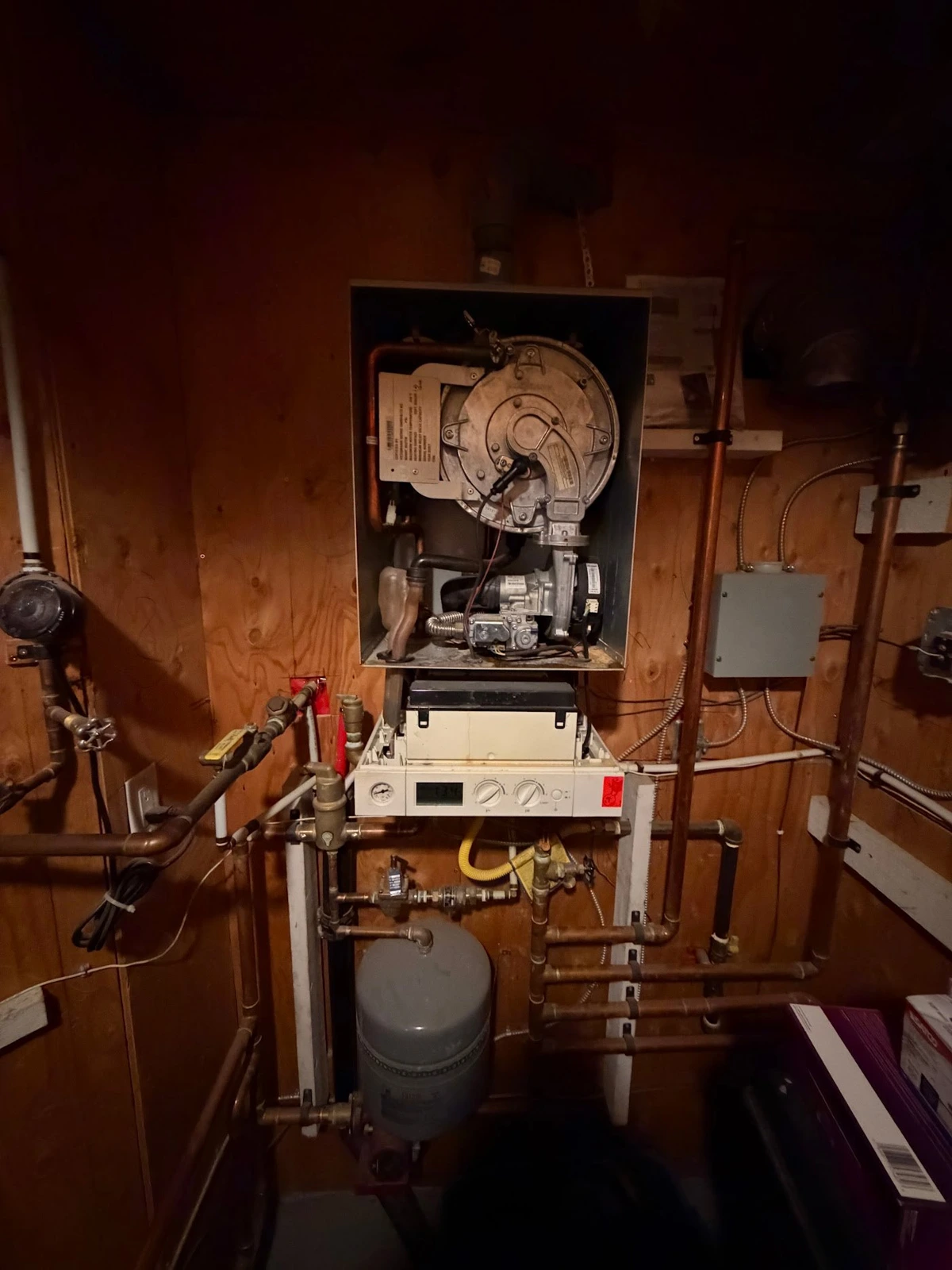
A combi can combine space heating and domestic hot water in one appliance, but it must suit simultaneous fixture use. A boiler with an indirect tank provides storage and a different recovery strategy. Available space, household usage and model performance determine which arrangement deserves closer assessment.
For example, one shower running at a time presents a different demand from two showers used together. This is a planning example, not a capacity recommendation for a particular model.
On a small screen, swipe the table sideways to see every column.
| Arrangement | Main question |
|---|---|
| Heating-only boiler | Can a suitable separate water heater remain? |
| Combi boiler | Can this model cover the expected simultaneous hot-water demand? |
| Boiler and indirect tank | What storage and recovery arrangement suits the home? |
Navien’s sizing guidance treats heating and domestic hot-water requirements separately. Compare model flow ratings under the same temperature-rise conditions.
Can Existing Radiators and In-Floor Heating Stay?
Existing radiators, baseboards and radiant circuits may remain when their condition and operating requirements suit the new installation. The assessment should identify the water temperatures, circulation and controls each circuit needs. Retaining equipment is a deliberate design decision, not an assumption that every connection is compatible.
Tell us about cold areas, noisy circulation or rooms that overshoot the thermostat setting. These observations help define the assessment; they do not establish a diagnosis by themselves.
A home with radiators and a separate floor-heating circuit may need different temperature control for those loads. The proposal should explain how the retained circuits connect to the new appliance.
How Is the Boiler Size Chosen?
Boiler selection should start with the heating requirement of the space being served, then consider the connected emitters, zones and domestic hot-water duty. The old appliance’s label is useful evidence, but copying its capacity does not establish that the replacement is appropriate for the current home.
The assessment brings together building heat loss, system operating temperatures, zone arrangement and equipment capabilities. Mention insulation upgrades, additions or changes in room use that could affect the design assumptions.
Ask for the reason behind the model recommendation. The answer should connect capacity to the building and intended use, rather than depend on square footage or brand preference alone.
What Happens From Assessment to Handover?
Installation should follow an agreed scope, a planned shutdown and the checks required for the selected equipment. Before booking the work, confirm access, expected heating and hot-water interruptions, applicable permits and who handles each task. Completion includes operating checks and an explanation of the controls.
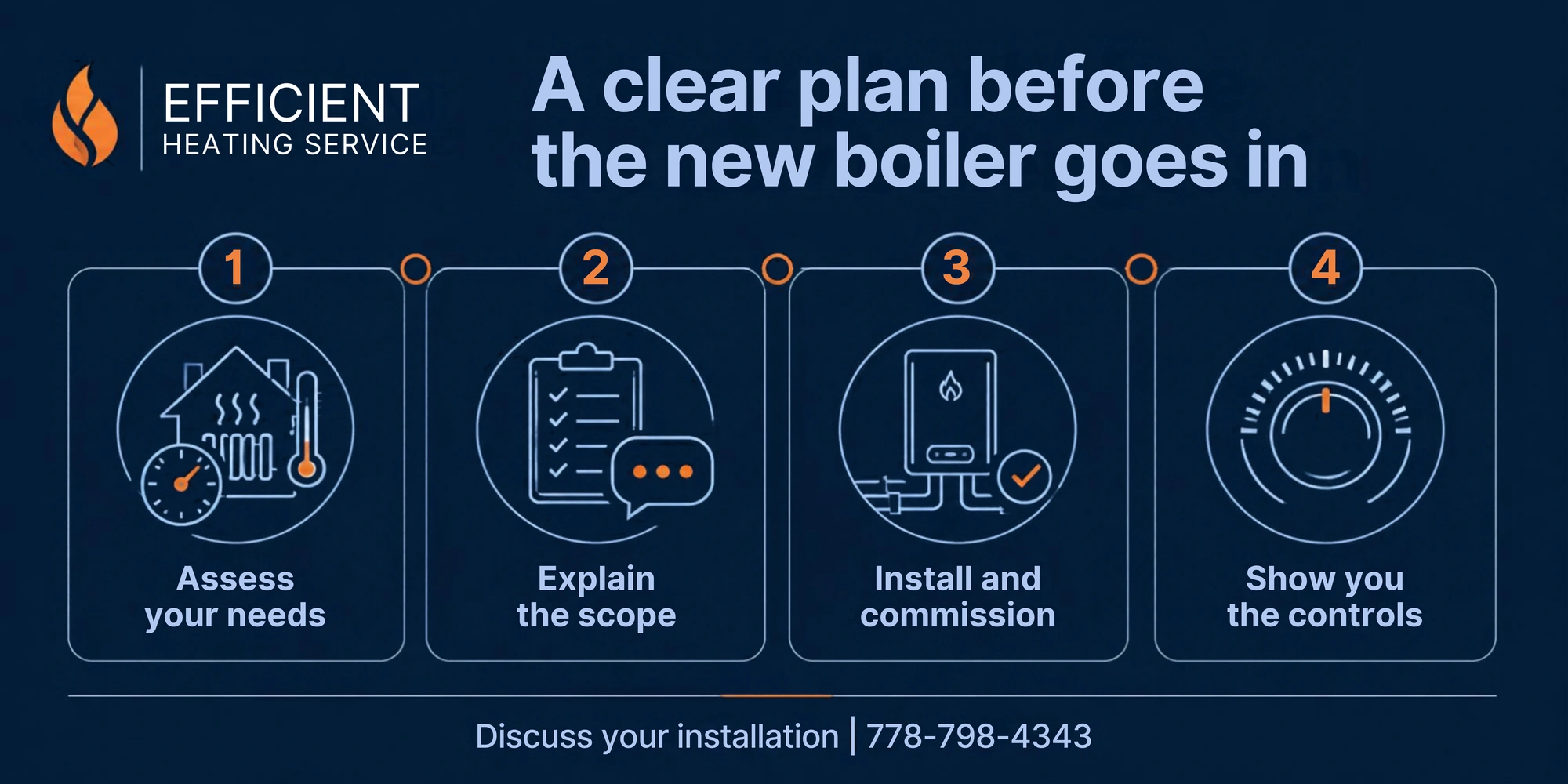
- Assess the equipment, household needs and unresolved comfort problems.
- Define the model, retained components, upgrades, exclusions and approvals.
- Coordinate access, material availability and the planned interruption.
- Install the agreed system and perform manufacturer-required start-up checks.
- Explain operation, provide relevant documents and discuss future maintenance.
Commissioning is model-specific. Verifying the appliance and connected heating operation takes more than confirming that the burner fires. For ongoing care, see Vancouver boiler service.
Which Brand and Supporting Components Fit?
Choose a suitable system arrangement before comparing brand badges. Viessmann, IBC and Navien offer different model families, so capacity, hot-water performance, control compatibility and service requirements need checking at model level. The accompanying pumps, valves, expansion control and venting must also suit the proposed installation.
Ask the proposal to distinguish what stays, what changes and what needs further investigation. A new appliance does not automatically mean that every nearby pump or valve is included.
- Pumps and zone controls connect each area’s heat demand to system operation.
- Expansion and relief components must suit the planned system and equipment requirements.
- Air and dirt separation are considered alongside the manufacturer’s water-side requirements.
- Venting and condensate arrangements depend on the appliance and installation conditions.
Bring the existing model details to the assessment. The previous brand is useful context, not a requirement to choose it again.
For an existing appliance, our Viessmann boiler repair information can help you frame the repair discussion before comparing replacement equipment. A repair page does not replace the installation instructions for the model proposed in your quote.
What Needs Checking for a Vancouver Property?
For a Vancouver installation, confirm the proposed work against City permit requirements and any strata conditions before scheduling. The existing fuel, appliance type and capacity matter to the permit assessment. Shared equipment, restricted access and changes to the building can add coordination beyond replacing an appliance.
The City’s mechanical permit guidance lists an exception for certain same-type, same-capacity gas appliance replacements, while still requiring a gas permit. The actual scope determines whether that exception applies.
For enquiries from Kitsilano, Mount Pleasant, Dunbar-Southlands, Kerrisdale, Downtown, Fairview, Marpole, Oakridge, Riley Park, Renfrew-Collingwood, Hastings-Sunrise, West End or another Vancouver neighbourhood, tell us the property type and whether the equipment serves only your home. Establish responsibility and access approval before work on a shared system.
What Should You Expect From Your Installer?
Expect a recommendation that explains the problem, the proposed solution and the boundaries of the work. Efficient Heating Service brings Class B gas-fitting expertise to the assessment and installation discussion. Ask about sizing, retained equipment, commissioning and written coverage so you can evaluate the proposal clearly.
Our discussion starts with what you want to improve and what the system needs. Model details and photographs support the initial conversation; an assessment establishes conditions that cannot be confirmed remotely.
The boiler installation overview explains the wider service scope.
Arrange Your Vancouver Installation Assessment
Send the boiler model, a wider photo of the equipment area and a short explanation of what you want to improve. Include any heating or hot-water problems and relevant access restrictions. We can then discuss the information needed for a clear, property-specific installation assessment and proposal.
Questions Before Booking a Boiler Installation
Before committing, clarify shutdown arrangements, access, approvals and the documents you will receive. These practical details influence how the work fits your household. The answers below cover decisions that can remain after selecting a system; final commitments belong in the written proposal for your own property.
Can an installation quote be confirmed from photos alone?
Photos can support an initial discussion, but may not reveal the vent route, gas capacity or concealed connections. A project-specific assessment is needed before unresolved items can be priced confidently.
Will a replacement boiler fix a cold room?
Only if the identified cause is addressed by the replacement. A circulation, control or emitter problem may remain after a new boiler is fitted. Report the affected room before agreeing the installation scope.
Should I remove a working tank when fitting a combi?
Not without checking household demand and model performance. Keeping suitable separate hot-water equipment may be an option. Compare complete arrangements before authorizing removal.
Can work be planned around tenants or strata access?
Discuss access restrictions, notice requirements and the equipment’s service area before booking. Identify who arranges entry and how occupants receive notice of a planned interruption.
What documents should I receive at handover?
Ask for equipment details, relevant installation and warranty documents, operating guidance and maintenance requirements. Also confirm the applicable permit and inspection close-out arrangements.
Is a rebate guaranteed for replacing a gas boiler?
No. Eligibility depends on the current program and its conditions. Do not subtract a rebate from your budget until the project and equipment have been checked against those requirements.