
Updated: September 28, 2026
Boiler Installation Coquitlam: Replace the Boiler, Preserve the Comfort
You can often replace a boiler without replacing every radiator or floor-heating circuit. The first step is checking what your home needs and whether the existing distribution can support the proposed equipment. Efficient Heating Service assesses the complete arrangement before recommending a boiler and defining the installation work.
If you are comparing Boiler Installation Coquitlam options, start with three decisions: what stays, what changes and how the finished system will be checked. A clear answer to those questions makes a quote more useful than a model number alone.
How Much Will Your Boiler Replacement Cost?
Your installed price depends on the equipment and the changes needed to connect it properly. Venting, gas supply, drainage, controls and hot-water storage can all affect the work. Request an itemized proposal after assessment so you can distinguish the boiler price from the complete replacement cost.
A straightforward replacement and a conversion to a different system should not share an unexplained package price. Ask for the proposed model, removal arrangements, connection work, permit responsibilities, testing, taxes and exclusions in writing.
On a small screen, swipe the table sideways to see every column.
| What changes? | What the quote should explain |
|---|---|
| Boiler only, with suitable connections retained | Which existing components have been assessed for reuse |
| Different vent route or appliance location | The route, access work and responsibility for making good |
| Addition or removal of hot-water storage | Tank, piping and control changes |
| Changes to heating zones | Required valves, pumps, wiring and commissioning |
An estimate based on photographs can start the conversation. It should identify anything that still needs checking on site before the price is confirmed.
Can Your Existing Radiators and Heated Floors Stay?
Existing emitters may remain when their condition, output and operating requirements suit the new system. The assessment should consider the rooms they serve, the water temperatures they need and the condition of connected piping. Replacing the boiler does not automatically require opening floors or replacing all radiators.
Bring up cold rooms, recurring air, leaks and any circuits that have been isolated. These details help separate a boiler replacement from distribution repairs that may also be needed.
Example: one room feels cold but the rest of the house is comfortable
That symptom alone does not establish a need for a larger boiler. A technician should check the affected circuit and its controls before including a comfort promise in the replacement proposal. If diagnosing the fault is your first priority, start with our Coquitlam boiler repair assessment.
Combining floor heating and radiators
Different emitter types may need different operating temperatures. The proposed controls and piping must account for those requirements. Ask which parts of the current arrangement will remain and how each heating circuit will operate after the change.
What Can a Photo Show Before the Existing System Is Reconnected?
A wide photograph helps identify the appliance and the equipment connected around it. It gives the installer a starting point for discussing what may remain during replacement. The pipe routes, condition and operating requirements still need assessment before any component is accepted for the new arrangement.
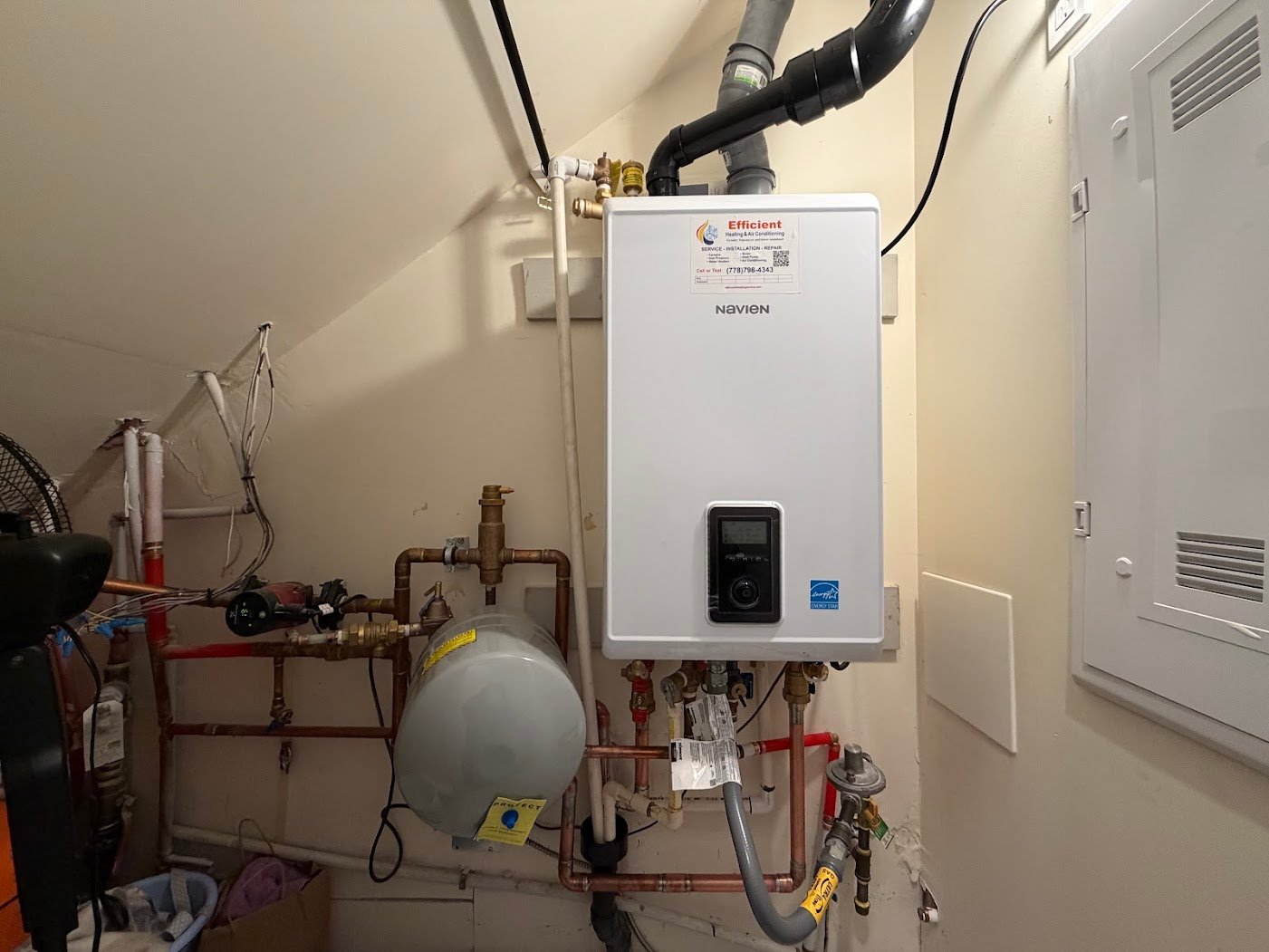
Here, the visible pipework, circulator and expansion vessel provide specific items to discuss. Ask which circuits they serve and what checks will establish their suitability for the proposed boiler. A photograph cannot confirm hidden pipe routes, fluid condition or the results of operating tests.
5 Checks That Guide the Equipment Choice
Choose equipment from the home’s heating requirement and the proposed operating conditions, rather than copying the old appliance rating. Hot-water demand needs a separate assessment when the boiler will serve it. Planned renovations also matter because changes to insulation, windows or heated space can change the requirement.
The useful numbers belong in the project assessment. You do not need to calculate them yourself.
On a small screen, swipe the table sideways to see every column.
| Information to establish | Decision it supports |
|---|---|
| Design heat loss for the spaces served | Required space-heating capacity |
| Emitter output at the proposed water temperature | Whether existing rooms can receive enough heat |
| Demand from the smallest active circuit | Review of low-load operation and controls |
| Simultaneous hot-water fixture demand | Combi capacity or storage selection |
| Available gas supply and connection requirements | Whether supply changes belong in the quote |
A future addition should be discussed now, with its assumptions recorded. Simply choosing a larger model does not explain how that future space will be heated.
Should You Keep Hot-Water Storage or Choose a Combi?
A combi can combine space heating and domestic hot water in one appliance, but it still has a defined hot-water capacity. Compare actual fixture demand and available space before removing a tank. Keeping suitable separate water-heating equipment may be the more practical arrangement for your household.
Describe a normal busy morning: which showers and taps run together, and whether another occupied area shares the supply. That tells the installer more than bathroom count alone. Navien’s combi sizing guidance explains why both heating and hot-water demand matter.
An indirect tank is another option where the design calls for stored hot water heated by the boiler. Compare the whole installation, including usable storage, recovery needs, controls and space for future servicing.
Which Brands and Components Belong in the Proposal?
Compare a specific model and its supporting components, rather than selecting a brand in isolation. Viessmann, IBC and Navien offer equipment worth discussing for suitable applications. The proposal should explain the chosen arrangement, maintenance access and the condition of any components that will remain in service.
Boiler and control selection
Ask about the model’s heating range, hot-water configuration, control compatibility, warranty conditions and maintenance requirements. Our Viessmann boiler information provides a starting point for discussing that manufacturer’s equipment. Confirm suitability for your property during assessment.
Check the model designation as well as the brand. Viessmann’s Vitodens 100-W B1HE and B1KE versions distinguish heating and combi configurations. Navien’s NHB-H and NCB-H families provide another heating-only versus combi comparison. Those product roles do not establish the right size or piping arrangement for your home.
If you are comparing replacement with repair of an existing Navien unit, use our Navien repair information and keep the full model number available.
Components around the boiler
- Circulation: pumps and zone valves suited to the intended circuits.
- Pressure and expansion: appropriate expansion provision and required safety devices.
- Air and system condition: air management and cleaning or treatment specified for the equipment and existing system.
- Connections: approved venting, gas supply, condensate arrangements and electrical work.
- Service access: isolation points and clearances that allow future maintenance.
This is a scope checklist, not a promise to replace every item. A sound existing component may remain when it meets the design and manufacturer requirements.
How Will the New Controls Affect Daily Comfort?
The control setup should match the home’s emitters and the way the heating is used. Ask how room thermostats, any outdoor sensor and hot-water controls work together. The handover should explain normal operation and which settings belong to the homeowner, with technical adjustments left to the installer.
Do not assume that a smart thermostat is automatically compatible or that every boiler uses the same control sequence. The correct setup depends on the selected model and connected system.
Where outdoor reset is part of the design, the controls adjust the target heating-water temperature in response to outdoor conditions. Ask the installer to explain what you should expect during milder weather and how to report a room that remains uncomfortable. Avoid making unexplained changes to installer settings.
Who Handles Permits for a Coquitlam Installation?
Coquitlam directs electrical and gas permit enquiries to Technical Safety BC and provides its own plumbing-permit process. Confirm the requirements for the actual work before installation begins. The written scope should identify who arranges each applicable permit, required inspection and completion document for your particular property.
Use the City’s gas and electrical permit guidance and plumbing-permit information as the starting references. Building alterations may introduce additional requirements; the equipment price alone does not define the approval process.
For a strata property, identify ownership of the equipment and any approval needed for changes to common areas or exterior venting. Confirm access and shutdown notices before setting the installation date.
What Happens Between the Assessment and Handover?
The installation should follow an agreed sequence: assess the system, confirm the work, arrange access, replace the equipment and complete the required start-up checks. Before booking, clarify the expected heating and hot-water interruption. The final handover should explain operation, documentation and the next maintenance steps.
- Survey the complete system. Record the appliance, emitters, hot-water arrangement, access and reported problems.
- Define the proposed work. Identify the equipment, retained components, connection changes and exclusions.
- Plan the shutdown. Agree access, removal, occupant needs and the expected interruption.
- Install and commission. Follow the selected manufacturer’s instructions and check the intended connected-system operation.
- Explain the result. Review controls, documents, warranty conditions and the maintenance plan with you.
Ask how commissioning findings will be recorded. Relevant checks may include combustion, leaks, circulation, control responses and hot-water operation, according to the appliance and installation. A single successful start does not describe every function that needs checking.
Why Choose Efficient Heating Service?
You need an installer who can explain how the proposed boiler will work with the rest of your home. Efficient Heating Service focuses the discussion on equipment suitability, a defined scope and practical operation. Bring your comfort concerns and future plans so they become part of the assessment.
Our approach starts with explaining the proposed work in plain language. Ask us what can stay, why a component needs changing and what the quoted work will resolve. We can also discuss planned boiler service in Coquitlam so routine care remains part of the ownership plan.
For a wider overview of installation options, visit our boiler installation services. Gas work must be performed under the appropriate qualifications and approvals; confirm those details as part of selecting your installer.
Which Coquitlam Neighbourhood Should You Include When Booking?
Include your neighbourhood and full street address when you contact us. Names such as Westwood Plateau, Burke Mountain, Maillardville and Austin Heights help locate the enquiry. The proposal still depends on your heating equipment, the rooms it serves and any changes you want to make.
Other names in the City’s community profile areas include Ranch Park, River Heights, River Springs, Eagle Ridge, Hockaday Nestor, Cariboo/Burquitlam, Town Centre, Cape Horn and Central Coquitlam. Give the full address even when a neighbourhood name is familiar.
Tell us about unit access, the location of the equipment and any approval needed before work can begin. A neighbourhood name does not determine the boiler model, fuel supply or expected response time. Confirm the proposed work and appointment availability when booking.
Book a Coquitlam Boiler Installation Assessment
Tell us what you want the replacement to improve, whether the boiler also supplies hot water and which areas of the home it serves. Photos of the full equipment space help start the discussion. Efficient Heating Service can then arrange an assessment and explain the next steps.
Include access details and describe any planned change to the rooms, heating circuits or hot-water arrangement. Tell us whether the current system is operating so the assessment can address both the replacement plan and any immediate fault.
Questions Before Replacing a Boiler in Coquitlam
Before approving a replacement, clarify the practical details that affect your home during and after the work. These questions cover equipment location, retained connections, comfort expectations and future maintenance. The answers provide a starting point; the assessment determines which changes are suitable for your particular installation.
Do you have to replace the chimney or existing vent?
The new appliance needs a venting arrangement approved for that model. An existing route may be usable, but its material, configuration and termination need assessment. Ask the quote to explain what happens to any venting that is no longer used.
Can the new boiler move to another wall or room?
Possibly. A move changes more than the mounting position: gas, venting, drainage, water connections, electrical supply and service clearances all need review. Compare the relocation cost with keeping a suitable existing location.
Does new equipment mean all the heating pipes need flushing?
The installer should assess system condition and follow the selected manufacturer’s cleaning, filling and water-quality requirements. Ask what preparation is included and whether identified debris, contamination or leaks need separate work. One treatment is not suitable for every system.
Should we replace a working boiler before a renovation?
Plan the heating and renovation together before deciding the order. A change in heated area or insulation can affect equipment selection, while new cabinetry or walls can restrict access. The best sequence depends on what the renovation changes.
Can you install while we stay in the house?
Often, occupants can remain, but confirm access restrictions and the planned loss of heating or hot water. Mention vulnerable occupants, tenants and work-from-home needs when arranging the assessment. Agree a practical shutdown plan before work starts.
Will a condensing boiler always reduce my bill by a fixed percentage?
No fixed saving should be promised without evidence for your home. Previous equipment, system temperatures, controls, occupancy and weather all affect fuel use. Compare the proposed system and operating assumptions instead of relying on a universal percentage.
Do cold radiators after installation always indicate a fault?
Not necessarily; the system may not be calling for heat, or its controls may be operating differently. A room that cannot reach the intended temperature needs follow-up. Record the thermostat setting and affected room, then contact the installer rather than changing technical settings.
What should I keep after the work is finished?
Keep the equipment model and serial number, invoice, scope, relevant permit documents, operating instructions and warranty information. Retain any commissioning record provided and subsequent service records. They make future troubleshooting and maintenance discussions more useful.