
Updated: September 30, 2026
Boiler Parts Replacement Starts With a Confirmed Fault
Boiler parts replacement should solve a diagnosed problem and use a component matched to the equipment. Efficient Heating Service assesses the appliance and connected heating system, identifies the proposed part and explains the work before you approve it. Send the model, serial number and symptom to start.
For homeowners arranging boiler repair in Greater Vancouver. Component identification, diagnosis and supplier availability are separate steps.
What Information Identifies the Correct Boiler Part?
Start with the full appliance model and serial number, then identify the component itself. External pumps and zone controls may come from a different manufacturer. A matching shape or connection size is not enough; the replacement must suit the equipment version, operating requirements and intended application.
- Photograph an accessible equipment label and the display without removing covers.
- Keep the exact fault code, including punctuation, and describe when it appears.
- Provide the previous invoice or part number if someone has already attempted a repair.
- Tell us whether the part is inside the boiler or attached to the external pipework.
For Viessmann equipment, ViParts supports serial-number and compatibility lookup. Our Viessmann model guide explains the different generations. For a Navien appliance, start with the Navien repair page and provide the complete model label.
For other boiler families, use the matching model guide before comparing replacement components:
- NTI models and safety notices: Identify TRX, FTVN and earlier generations before selecting a component.
- Lochinvar Knight and Epic models: Separate the boiler, combi and indirect-tank arrangement.
- Bosch and Buderus identification: Match Greenstar, Singular or the exact Buderus family.
- Weil-McLain models and CP identification: Confirm the series and heat-exchanger design.
- Triangle Tube parts and recall status: Verify support, compatibility and actual availability before ordering.
- IBC boiler model identification: match the full family, generation and serial number before selecting parts.
- Rinnai boiler families: distinguish heating-only, combi and tankless equipment.
- Burnham boiler identification: separate cast-iron and condensing families.
- Laars models and generations: match Mini-Therm, FT and earlier product names.
- Super Hot component compatibility: check full model details and relevant pilot revisions.
Which Components May Be Part of the Repair?
A boiler system contains combustion, control and water-circulation components, often spread across the appliance and surrounding pipework. The symptom helps define what to investigate, but it does not name the failed part. Ask which component is affected, how it was identified and what the replacement includes.
| Component | Role in the system | What to clarify |
|---|---|---|
| Circulator pump | Moves heating water through a circuit. | Is the issue the pump, its control or the circuit conditions? |
| Zone valve or actuator | Controls flow to an individual zone. | Is the actuator separately serviceable, and is the valve body sound? |
| Expansion tank and related pressure controls | Help the system accommodate changing water volume and pressure. | What pressure behaviour was recorded and where is water escaping? |
| Control board or sensor | Receives inputs and controls the operating sequence. | Which electrical or operating checks support replacing it? |
| Ignition, gas valve or fan components | Participate in the model-specific combustion sequence. | Which approved component and post-repair tests are required? |
| Heat exchanger, seals and condensate assembly | Transfer heat and manage the relevant water or condensate paths. | Is the scope cleaning, a seal repair or replacement of a damaged component? |
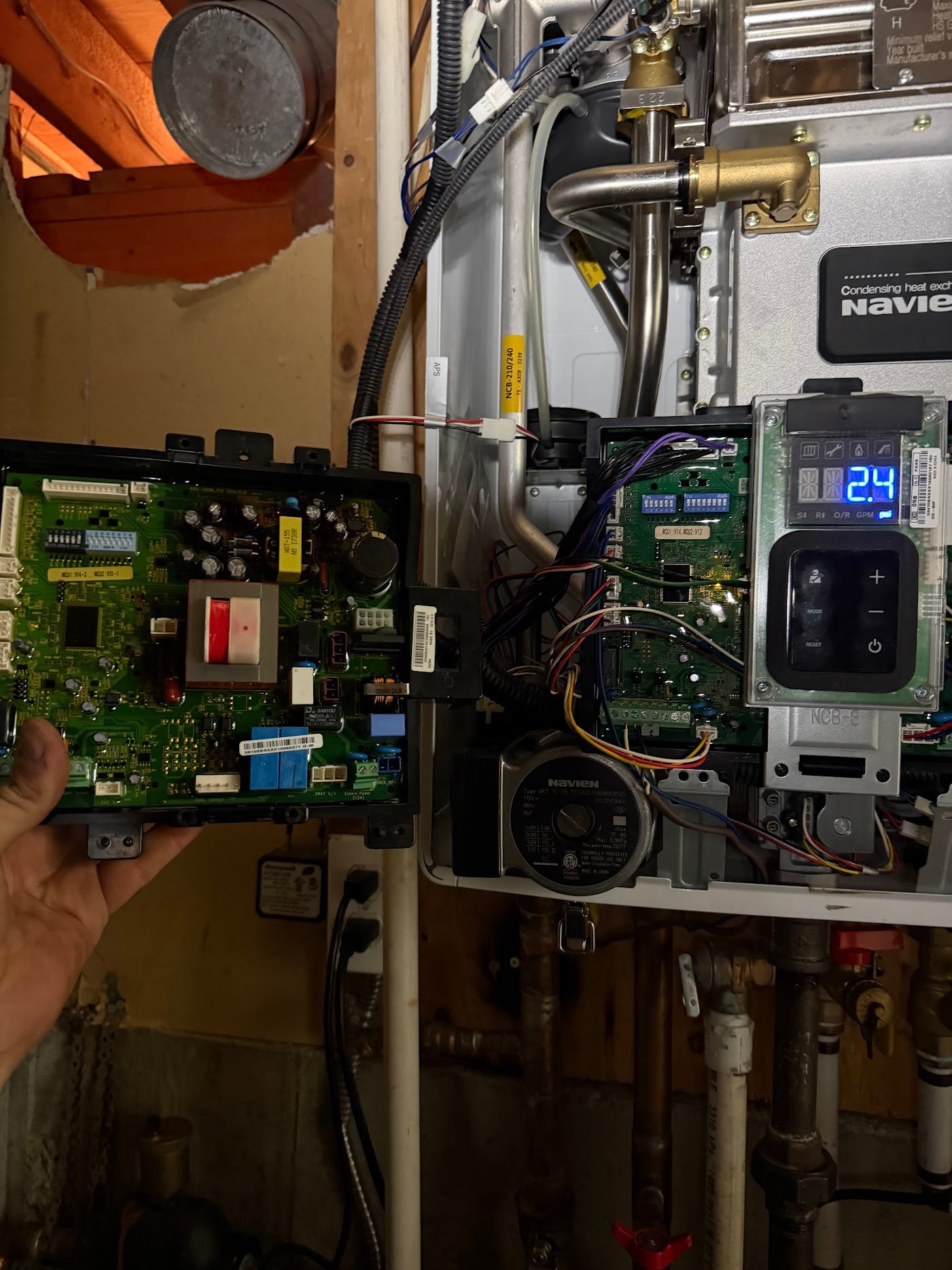
How Do You Know the Proposed Part Will Address the Problem?
The diagnosis should explain why the component needs attention and which related conditions were checked. A cold zone, pressure change or returning fault can have more than one cause. Ask for the findings in plain language and for any remaining uncertainty to be stated before replacement.
For example, a cold room does not by itself establish that its zone valve is defective. The thermostat demand, control signal and water path also matter. A board fault recommendation should account for the inputs and connected devices that affect its operation.
Caleffi’s hydronic troubleshooting guidance follows the system from the reported problem through controls and circulation. Its zone-valve guidance also distinguishes valve and actuator arrangements. These are technician references; keep appliance covers closed and do not alter gas or electrical components yourself.
6 Checks Before Approving a Parts Replacement Quote
A useful quote describes the whole repair rather than only the price of a component. Confirm the diagnosis, part identification, labour, associated work, timing and handover checks. Ask which charges apply if further testing changes the recommendation, and separate an assessment booking from approval to order parts.
| Quote check | What you should be able to understand |
|---|---|
| 1. Diagnosis | The fault being addressed and the findings that support the recommendation. |
| 2. Part identification | The component, compatibility and any associated seals or fittings. |
| 3. Work and price | Diagnosis, labour, taxes, access, draining/refilling and stated exclusions. |
| 4. Availability | Whether stock has been confirmed and whether a return visit is needed. |
| 5. Testing | How the repaired function and relevant operating conditions will be checked. |
| 6. Records and warranty | The invoice, service record, applicable terms and any remaining concerns. |
Ask for a revised scope if an additional fault is found. An advertised component price and an installed, tested repair cover different things; compare the same included work when reviewing proposals.
What Changes When a Part Is Delayed or Discontinued?
Part identification does not guarantee local stock. The supplier must confirm availability, any superseding reference and expected timing. If the component is unavailable, ask whether an approved alternative exists and how that changes the repair. A replacement assessment may be useful when a viable repair cannot be established.
A used or visually similar component is not automatically an appropriate substitute. Ask how the recommended alternative was checked and whether it changes the scope or warranty position. Avoid treating an estimated delivery date as a completed repair appointment.
If you expect manufacturer coverage, provide the installation date, registration and earlier service paperwork before ordering. Confirm the component coverage and the service costs separately under the terms that apply to your equipment.
Do Existing Pumps and Valves Need Replacing With a New Boiler?
Some external components can remain when a boiler is replaced, but they need assessment for condition and suitability. A working part is not automatically a suitable match for the proposed system. The installation quote should name retained and replaced components and explain the reason for each decision.
Circulation requirements, zoning and controls can change with the proposed equipment. Ask how the existing pump, expansion provision, valves and tank arrangement fit that plan. Our installation guide’s retained-component section covers the questions to resolve before equipment is ordered.
For an existing system that needs routine inspection rather than a known component repair, use the boiler service route. Tell the booking team about any active fault so it receives the right attention.
Request a Component Assessment With the Right Details
Describe the symptom first, then send the equipment identification and any earlier repair information. Tell us which heating zones or hot-water functions are affected and whether there is visible water. We can discuss the assessment and access requirements before deciding which component, if any, needs replacement.
Use our boiler repair directory for your local service page, or review Viessmann diagnostics and Navien diagnostics for those appliances. The contact form lets you describe the problem; a phone call lets you discuss appointment availability.
Does a Fault Code Mean the Control Board Needs Replacing?
A board replacement needs evidence beyond a fault message or an unresponsive screen. Ask whether power, wiring, connected sensors and the relevant operating sequence were checked. Provide the full model and previous repair invoice so the recommendation addresses the actual fault and correct controller generation.
For example, IBC’s V10 error guidance includes checks of sensor wiring and the control module. The same symptom does not mean the same repair on every generation. Request electronic fault diagnosis before ordering a board.
Ask whether the scope includes required configuration and testing after replacement. A visually similar board or a used part advertised online is not confirmation of compatibility.
Can the Heat Exchanger Be Cleaned, or Must It Be Replaced?
The answer depends on the confirmed condition and the exact heat exchanger involved. Ask whether the concern is deposits, a leaking seal, structural damage or another fault. Cleaning and replacement have different scopes; the proposal should identify the component, supporting findings and manufacturer-compatible work being recommended.
A primary boiler heat exchanger and a domestic-water plate heat exchanger serve different functions. Ask the quote to name the actual component. IBC publishes model-specific replacement instructions; a procedure for one model cannot be assumed suitable for another.
For cleaning, clarify what is included in boiler maintenance. For confirmed damage, compare repair scope and warranty eligibility with complete boiler replacement. Request both installed costs, exclusions and likely downtime without relying on a universal age or percentage rule.
Igniter, Flame Sensor or Gas Valve: What Does the Code Prove?
An ignition or flame-related code identifies a failed stage, not automatically the defective component. The technician must follow the exact model’s diagnostic instructions and explain the finding. Record the code and timing, but do not remove covers, adjust gas components or bypass a safety device.
Viessmann’s F4 bulletin is an example of model-specific ignition guidance. Use the Viessmann model guide to identify the appliance; other brands and controllers require their own instructions.
Temperature, pressure and flow sensors also need verification with their wiring and operating conditions. A sensor quotation should identify the part and why its signal is considered faulty. Book fault assessment when the problem is active.
Does a Condensate Leak Mean the Whole Boiler Has Failed?
Visible water does not establish which component failed or whether the boiler needs replacing. The source might involve a connection, trap, pump, pan or another water path. Describe where water appears and when it starts, keep clear of electrical equipment, and arrange diagnosis before ordering parts.
Condensing models have specific drainage and servicing requirements. For example, IBC documents a VX condensate pan and gasket kit. That reference does not establish the cause of an unidentified leak.
An active leak belongs in repair diagnosis. Inspection or cleaning of a functioning arrangement can be included when agreed in the maintenance scope. Tell the booking team about any pump, drain or recurring lockout concern.
Where Can You Read More About External Pumps and Valves?
External hydronic components can affect comfort even when the boiler itself operates. Pressure changes and cold zones deserve separate explanations because different observations guide the assessment. Use the two guides below to prepare useful information, then ask for the proposed repair to be tied to confirmed findings.
The guides cover expansion tanks, relief and fill valves, circulator pumps, zone-valve actuators and the distinction between a system symptom and a confirmed component failure.
Does an Airflow or Fan Fault Mean the Fan Must Be Replaced?
A fan or airflow message needs the diagnostic procedure for the exact boiler. Ask whether the fan command, feedback and relevant air or exhaust conditions were assessed. The proposed repair should explain why the evidence points to the fan rather than another component or operating condition.
IBC publishes fan replacement instructions for specified models, including a calibration requirement after the applicable software update. That is why the complete model and controller generation matter; a physically similar fan is not enough to establish compatibility.
Do not bypass an air-proving device or open the combustion assembly. Report the exact message, timing and recent work when requesting boiler fault diagnosis. Use the IBC model guide if that is your equipment.
Could a Mixing Valve Cause Unstable Hot-Water Temperature?
A thermostatic mixing valve blends hot and cold supplies to control delivered temperature. Its role differs from a boiler zone valve or combi diverter valve. If outlet temperature changes unexpectedly, report which fixtures are affected and ask the technician to identify the actual valve and application.
Caleffi’s domestic-water temperature-control guidance distinguishes valves serving distribution piping from protection at individual fixtures. A replacement must suit its intended application; the connection size alone is not a complete specification.
Do not raise the boiler or tank temperature to compensate for unexplained cold water, or remove temperature protection. Ask the assessment to distinguish the stored-water temperature, mixing function and delivered-water symptom. Discuss planned inspection through boiler service; report an active temperature fault before booking.
No Hot Water From an Indirect Tank: Is the Aquastat at Fault?
An indirect tank depends on the boiler and the controls and circulation serving its heating demand. Its thermostat or sensor is one possible diagnostic point, not the automatic replacement. Provide both equipment labels and describe whether the boiler heats the home while the tank stays cold.
Weil-McLain’s troubleshooting guide for specified older indirect models checks the tank thermostat, circulator, zone valve and boiler response. Those model-specific procedures belong to a qualified technician; they should not be applied as homeowner wiring instructions.
Ask which stage of the tank’s heating demand failed and how the proposed repair will be verified. A tank-control repair, a circulation repair and a storage replacement are different scopes. Use diagnosis for an active hot-water failure and installation planning when comparing replacement arrangements.
Questions About Boiler Parts, Quotes and Repair Decisions
These answers help you prepare for a component assessment and compare the proposed work. They cover identification, separate actuator repairs, returning faults, availability and service records. Bring the earlier invoice if a part has already been changed; it can help explain what was tested and what remains unresolved.
Can you identify a replacement from a photograph of the old part?
A clear photograph helps, especially if the label is readable. We also need the appliance model and serial number or the external component’s own identification. The proposed part must match the application and the diagnosed fault, not just the appearance.
Why does a boiler repair quote include seals or fittings as well as the main part?
Some replacements require associated seals, gaskets, adapters or connection work. Ask the technician to identify these items and explain why they are included. The matching instructions and the existing installation determine the required scope.
Does a noisy pump always need replacing?
No. Noise alone does not confirm a failed circulator. Air, flow conditions, controls and the connected circuit may need investigation. The quote should explain the finding that supports repair, adjustment or replacement.
Can the actuator be replaced without replacing the entire zone valve?
Sometimes the actuator is a separate serviceable component. Compatibility and the condition of the valve body matter. Ask whether the fault is in the actuator, valve body or control signal before agreeing to replace the whole assembly.
What if a control board was replaced but the fault came back?
Keep the earlier invoice and part details. A returning symptom needs a fresh assessment of the power supply, wiring, connected devices and operating sequence. It does not automatically prove that another board is the next repair.
Does the same part number guarantee that a part is available today?
No. Identification and availability are separate checks. Confirm the supplier’s current stock, any replacement reference and the expected timing. Ask when a return visit can be scheduled once the correct part is available.
Is this an online parts shop?
This guide explains component identification and replacement as part of a boiler service assessment. Contact Efficient Heating Service with the equipment details and your request. The page does not show live stock, standalone product prices or an online checkout.
What records should I keep after a component replacement?
Keep the invoice, identified part, scope of work, operational test record and any applicable warranty information. Note concerns that remain outside the completed repair. These records help with future service and any later warranty review.
Is an air-pressure fault the same as low boiler water pressure?
No. The labels refer to different monitored conditions. Record the complete displayed message and model before requesting service; adding water does not address an unidentified air or venting fault.
Is a mixing valve the same as a combi diverter valve?
No. A domestic-water mixing valve blends supplies to control delivered temperature. A combi diverter directs flow according to the appliance’s heating or hot-water demand. The technician should identify the actual component before specifying a replacement.
Can a boiler and its indirect hot-water tank use different brands?
They can be separate products. Provide both model labels and available control information. A component recommendation must fit the actual tank, boiler and connected arrangement rather than assuming that every part carries the boiler’s brand.