
Model-specific hydronic maintenance
Boiler Service North Vancouver for Radiators, Radiant Floors and Combi Systems
Efficient Heating Service provides planned boiler maintenance in North Vancouver with the appliance model, controls and connected hydronic circuit in view. We identify what routine service can address, what needs separate fault diagnosis, and what should be discussed before any added work is approved.
A direct answer before you book
What Does a Boiler Service in North Vancouver Actually Include?
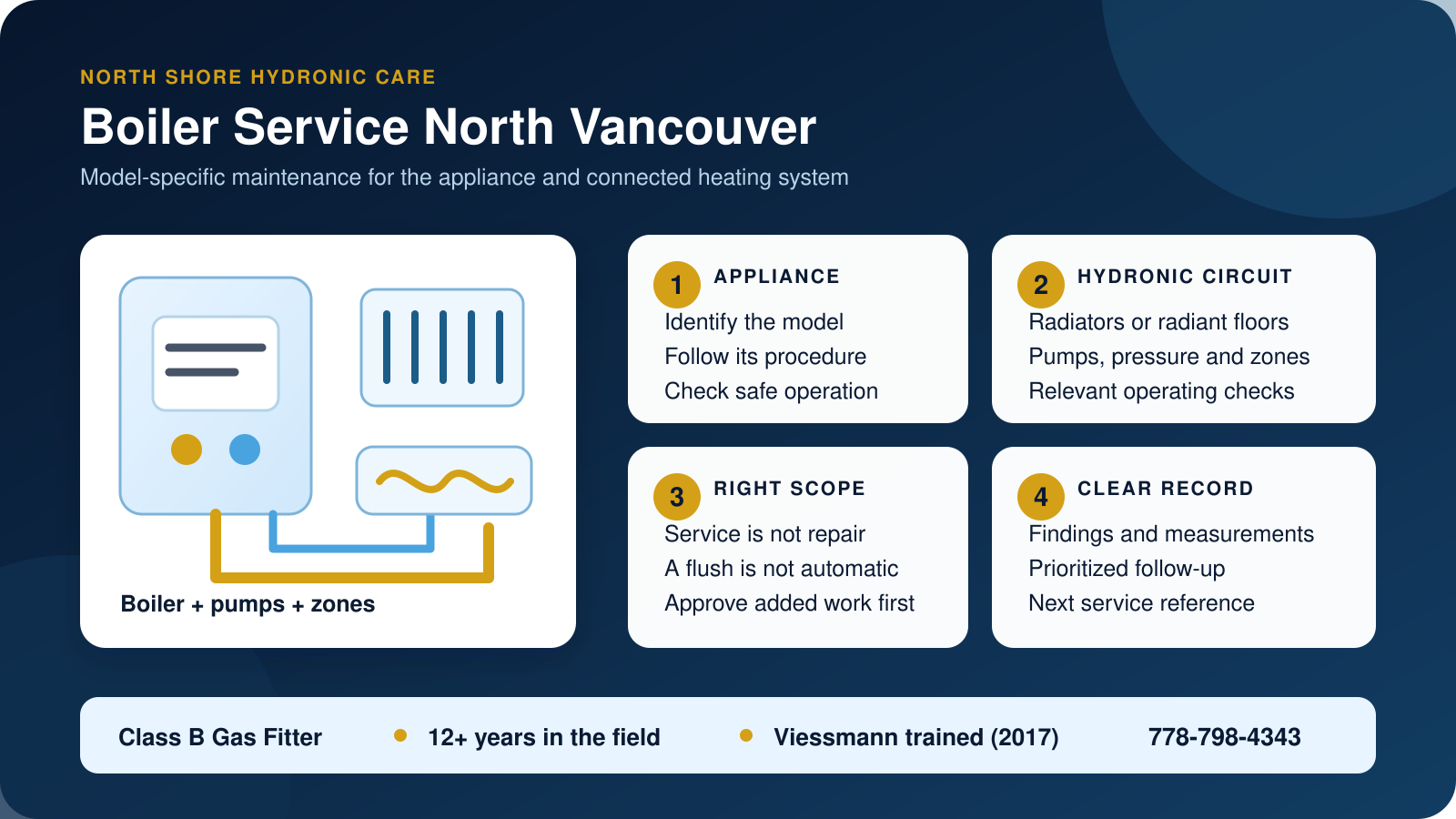
A proper boiler service is a model-specific maintenance visit—not a generic visual glance and not an automatic system flush. We first identify the boiler and its service requirements, review the reported symptoms and operating history, then complete applicable appliance, combustion, venting, condensate and control checks. We also observe relevant parts of the connected system, such as pressure, pumps, zone operation, radiators or radiant-floor response. If the boiler has a lockout code, repeated pressure loss, an active leak or no heat, the visit may require North Vancouver boiler repair diagnostics rather than routine maintenance. Findings and recommended next steps are explained before separately scoped work is authorized.
How the visit is organized
A Boiler Tune-Up Built Around the Installed System
Confirm equipment and concern
We record the model, visible installation details, heat emitters, controls and the reason for the appointment. A combi boiler serving domestic hot water needs different questions than a space-heating-only boiler.
Apply the relevant procedure
Access, cleaning and test points vary by manufacturer and model. We use the equipment information and condition to determine which maintenance actions and measurements apply.
Review the hydronic side
Relevant observations can include system pressure, visible leakage, pumps, zone valves, expansion components and the response of radiators or radiant-floor zones.
Document the decision
We separate completed maintenance from deficiencies, monitoring items and proposed repair. You receive a practical explanation rather than an unexplained list of parts.
Common service checks, where applicable
- Boiler model, displayed history and operating condition
- Burner, ignition and flame-sensing components
- Combustion and gas-side measurements required for the equipment
- Venting, combustion-air and accessible termination observations
- Condensate path on condensing boilers
- Operating pressure, temperature and visible leakage
- Pumps, controls, zone calls and connected heat response
- Safety and limit functions accessible within the service procedure
Important: the exact checklist is not identical for every boiler. Access, model instructions, existing faults and the system configuration determine the appropriate scope.
Clear scope, fewer surprises
Service, Repair, Flushing or Replacement?
Routine service
Planned maintenance for an operating boiler, completed using the applicable procedure and followed by a record of findings.
Repair diagnostics
Needed when there is no heat, a recurring fault code, shutdown, leak, unstable pressure or another active symptom requiring cause-based testing.
Water-side correction
Flushing, water treatment and balancing address different evidence. They are not automatically included in every annual boiler service.
| If you notice | The likely starting point | Why |
|---|---|---|
| The boiler works and service is due | Planned maintenance | Establish current condition and complete model-relevant checks before a fault develops. |
| No heat, a lockout code or an active leak | Repair diagnosis | The immediate symptom needs testing; cleaning alone may not identify or correct its cause. |
| Some rooms lag while the boiler runs | System assessment | Pumps, zones, controls, emitters or balancing may be involved; the boiler is only one part of the circuit. |
| Service findings lead to a replacement assessment | Installation planning | Replacement decisions should consider load, venting, gas supply, controls and domestic-hot-water needs—not age alone. |
North Vancouver appointment planning
Prepare the Information That Makes the Visit More Useful
Send equipment details
- A clear photo of the model/serial label
- A photo of the boiler and nearby piping
- Any displayed code and when it appears
- Previous service or repair information, if available
Confirm access
- Clear the immediate work area
- Confirm parking or building entry instructions
- Arrange strata or mechanical-room authorization when needed
- Identify whether domestic hot water also comes from the boiler
From Lower Lonsdale and Central Lonsdale to Lynn Valley, Edgemont, Blueridge and Deep Cove, access and system layouts can differ substantially. The neighbourhood name does not determine the service procedure; the equipment, connected zones and actual site conditions do. For shared or light-commercial mechanical rooms, we review equipment details, authorization and scope before confirming the work.
What affects boiler service pricing?
The boiler model, physical access, service history, current condition and the work required by the applicable procedure all affect the visit. Parts, extended fault diagnosis, difficult access and separately approved water-side work can change the total. Providing model-label and installation photos helps us discuss the correct starting scope without inventing a one-price-fits-all promise.
For city-specific fault finding, use our boiler repair North Vancouver page. For replacement planning, compare options on the North Vancouver boiler installation guide. You can also review the broader boiler service and maintenance overview.
Questions customers ask before booking
Boiler Service North Vancouver FAQs
How often should a boiler be serviced?
Follow the boiler manufacturer’s maintenance schedule and consider the equipment’s age, use, water quality and service history. Many owners plan an annual review, but the correct interval and tasks should come from the installed model’s requirements rather than a generic checklist.
Is a boiler service the same as a safety inspection?
No. Routine maintenance, a formal inspection and repair diagnostics can have different purposes and documentation. Tell us what your insurer, strata, manufacturer or authority has requested so we can confirm whether the required scope matches the service you are booking.
Does every boiler service include flushing the heating system?
No. Appliance maintenance and system flushing are separate tasks. A flush or water-treatment recommendation should be based on evidence, compatibility and an intended result—not added automatically to every tune-up.
Can you service a combi boiler that also provides hot water?
We review the exact combi model, symptoms and installation before confirming scope. Space-heating and domestic-hot-water concerns should both be described because they may point to different components or operating conditions.
Why does my boiler pressure keep dropping?
Repeated pressure loss can involve visible or concealed leakage, the expansion side, a relief discharge, filling components or another system condition. Continually refilling is not a maintenance plan; the cause needs diagnosis, especially if the loss is frequent.
Can a service fix cold radiators or slow radiant-floor zones?
A service may identify relevant operating clues, but uneven heat can involve air, pumps, zone valves, controls, balancing, flow restrictions or emitter-side issues. We explain whether the next step is maintenance, adjustment or separately scoped system diagnosis.
What should I do if the boiler locks out before the appointment?
Record the displayed code and symptoms when it is safe to do so, and tell us whether there is no heat, a leak or repeated shutdown. The appointment may need to change from planned service to repair triage. Do not remove covers or repeatedly reset equipment that will not remain operating.
Clear maintenance decisions
Book Boiler Service in North Vancouver
Share the boiler model, system type, access details and the reason for the visit. We will help define whether you need planned maintenance, repair diagnosis or a separate hydronic-system assessment.
Page reviewed and updated September 28, 2026.