
No heat, cold air or repeated shutdowns?
Furnace repair starts with finding why heat stopped, not guessing which part to replace. Efficient Heating Service checks ignition, airflow, controls and venting, then explains the repair options. Call with your model number, fault code and symptoms so we can discuss the next available appointment.
For a furnace that still heats normally, book preventive maintenance. For recurring major faults or a planned upgrade, compare replacement options.
Smell gas? Leave the building without operating electrical switches. From outside, call FortisBC at 1-800-663-9911 or 911. A gas leak needs emergency help, not an online booking.
What the symptoms tell us before a repair
A symptom helps narrow the checks, but it does not identify a failed component by itself. Tell us whether the burners start, the fan runs, heat reaches every room and the problem returns after a restart. That sequence is more useful than a guessed part name.
| What you notice | What needs checking |
|---|---|
| Fan runs but air stays cool | Fan setting, heat demand, ignition sequence and any safety shutdown. |
| Burners light, then stop | Flame proving, electrical grounding and the recorded fault sequence. |
| Heat stops after several minutes | Filter and duct restrictions, blower performance and temperature rise. |
| Water near a condensing furnace | Drain, trap, tubing and condensate pump where fitted. |
| One room stays cold | Duct delivery, return air and room conditions as well as furnace output. |
Check the thermostat is calling for heat and that accessible vents are unobstructed. Follow the owner’s manual for filter replacement. Do not bypass a safety switch or repeatedly reset a furnace that locks out.
Which furnace parts can need attention?
The correct repair depends on the furnace model and test results. Igniters, flame sensors, inducer assemblies, blower motors, control boards and safety switches perform different jobs. A code naming one circuit can reflect a problem elsewhere, so replacing the named part alone may leave the fault unresolved.
- Ignition and flame sensing: confirm the start sequence and flame signal before choosing cleaning or replacement.
- Inducer and pressure circuit: assess the draft path, intake, exhaust and condensate arrangement.
- Blower and motor controls: distinguish an airflow restriction from a motor, module or electrical fault.
- Limit and rollout protection: investigate the reason for the trip; never defeat the protection.
- Heat exchanger: explain inspection findings and whether continued operation is appropriate.
Send the complete model and serial number. Parts availability, any applicable warranty and the repair price require confirmation for that exact unit.
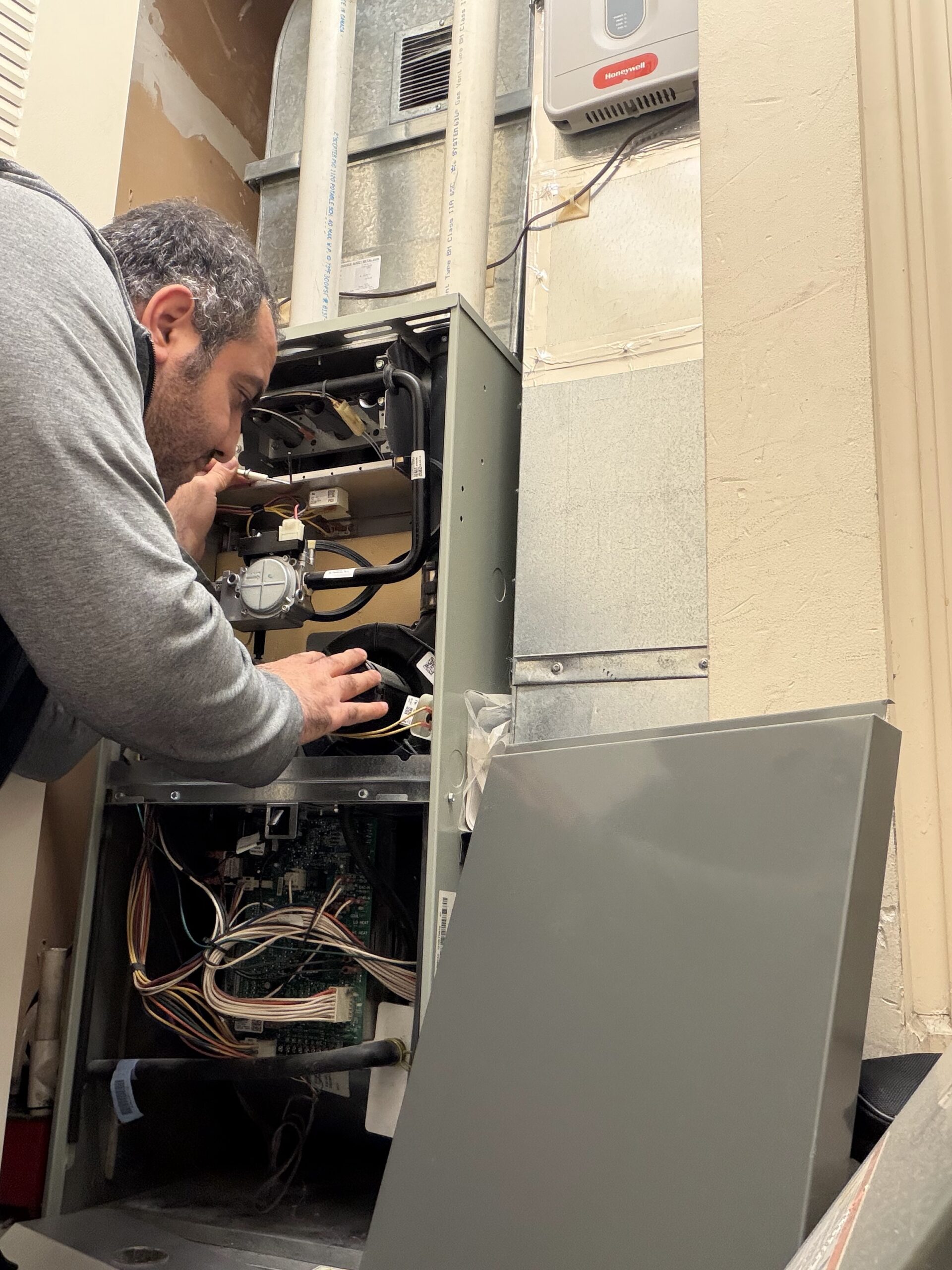
Repair the furnace or replace it?
Compare the diagnosed repair with the condition of the complete system, not age alone. An isolated serviceable fault may justify repair. Repeated failures, a damaged heat exchanger, unavailable parts or unresolved comfort problems call for a replacement discussion with a written scope and clear equipment options.
Ask what the price includes: diagnosis, part, labour, testing, tax and any return visit. Request the warranty terms in writing. A repair estimate should also identify any separate duct or control work needed to make the fix effective.
If replacement is being considered, our installation guide explains heat loss, airflow, venting and commissioning. Once a repair restores operation, scheduled service helps track the furnace’s condition.
Find your furnace brand
Use the brand links to reach the relevant repair information, then check the model plate on your own furnace. Brand names cover several generations of equipment. Ignition systems, motors, control logic and replacement parts vary, so a brand match alone cannot confirm the correct repair.
- American Standard
- Lennox
- Goodman
- Trane
- Bryant
- Airco
- Ruud
- General Electric
- Amana
- KeepRite
- Ducane
- Rheem
- Payne
- Ameristar
Other brands shown on our existing service information include Carrier, York, Coleman, Heil, Daikin, Napoleon, Luxaire and Comfortmaker. Contact us with the exact model to confirm support and parts availability.
Choose your local furnace repair page
Select your city for local repair information and service coverage. This page explains the general diagnostic process; the city pages help you choose the right local starting point. When booking, include your neighbourhood, access details and whether your home has completely lost heat or still heats intermittently.
Technical references: Carrier furnace troubleshooting; FortisBC gas odour guidance.
Your furnace repair questions
These answers cover the decisions customers face before a no-heat visit: whether a code proves a failure, what a quote can include and when replacement deserves consideration. Keep the model number and symptom history ready so the conversation starts with your equipment and the problem you need solved.
Does an error code prove that a part has failed?
No. A code identifies a condition or circuit detected by the controls. Testing is needed to distinguish a failed component from wiring, airflow, venting or another cause.
Can you quote a repair from a photograph?
A clear model plate and fault display help us identify the equipment. A confirmed repair quote usually needs diagnostic findings. Ask about the diagnostic charge and what the final quote includes.
Should I keep resetting the furnace to get heat?
Do not keep resetting a recurring lockout. Record the displayed code and the sequence you noticed, then arrange diagnosis. Do not bypass switches or remove safety devices.
Does a running blower mean the burner is working?
No. The fan can run for circulation, after a heating cycle or during certain fault conditions. Tell us whether the thermostat is calling for heat and whether the home temperature is falling.
Can an older furnace still be repaired?
Sometimes. The decision depends on the diagnosed fault, overall condition, safe operation and part availability. Compare the written repair scope with replacement when major or repeated problems are present.