
Replacing your furnace starts with the whole heating system
A furnace installation should match your home’s heat loss, duct capacity and control setup. Efficient Heating Service reviews the existing system, explains equipment options and defines venting, drainage and commissioning work in the quote. Call with your current model, comfort concerns and project timing to discuss replacement.
If you have one unexplained fault, start with repair diagnosis. If the equipment heats reliably and needs routine care, choose furnace maintenance.
How do you choose the correct furnace size?
Choose capacity from a heat-loss assessment and the home’s distribution system, not by copying the old furnace label. Insulation, windows, air leakage and renovations can change the load. The proposed furnace must also work with available airflow, so a larger appliance is not an automatic solution to cold rooms.
Natural Resources Canada recommends calculating the home’s heating requirements when choosing a furnace. Ask what sizing method supports the proposal and which assumptions were used.
Tell us about additions, finished basements and rooms that overheat or stay cold. A duct restriction or inadequate return path needs its own correction; replacing the furnace alone may leave that room uncomfortable.
Which equipment features matter for your home?
Compare heating capacity, efficiency, heating stages and blower operation as separate features. A high efficiency rating does not establish the correct size or solve a duct problem. The useful choice is equipment that meets the load and works with your thermostat, airflow requirements and any connected cooling system.
| Feature | Question to ask |
|---|---|
| Single-stage, two-stage or modulating heat | How will the equipment respond to changing heating demand? |
| Blower type and setup | What airflow is required, and can the existing ducts support it? |
| Thermostat and controls | Will the current thermostat operate the proposed stages and accessories? |
| Condensing furnace | Where will the approved vent, intake and condensate drain run? |
| Air conditioning or heat pump | Is the proposed equipment compatible with the complete planned system? |
Use the exact model numbers in the proposal to compare options. Brand reputation alone does not establish sizing, compatibility, stock or installation quality.
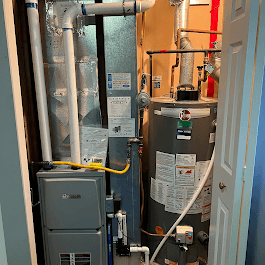
What belongs in a written installation quote?
A useful quote identifies the equipment and the work required to make it operate correctly. It should describe duct transitions, controls, electrical and gas connections, venting, condensate handling and startup checks. Confirm removal of the old equipment, applicable permits, exclusions and warranty terms before accepting the proposal.
- Exact model numbers and included thermostat or accessories.
- Required duct, return-air and filter changes, with any exclusions.
- Venting route, termination and drainage work appropriate to the model.
- Responsibility for permits, inspections and any additional trade work.
- Equipment removal, site access and the expected interruption to heating.
- Manufacturer coverage, registration requirements and labour warranty terms in writing.
Do not subtract a rebate from the project budget until current program and equipment eligibility are confirmed. An old offer on a website is not proof that your installation qualifies.
What should happen before the installer leaves?
Commissioning checks whether the installed furnace operates as intended, rather than simply confirming that warm air appears. The technician should verify the model’s required operating conditions, heating controls and safety functions, then explain filter access and routine care. Ask for the startup record and any remaining follow-up work.
Relevant checks can include temperature rise, airflow setup, heating stages, gas and combustion measurements, venting and condensate drainage according to the manufacturer’s instructions. The required settings are model-specific.
New safety controls do not make a gas appliance risk-free. Keep its manual and schedule ongoing maintenance. If a new installation develops repeated faults, report the exact symptoms rather than repeatedly resetting it.
Plan access, timing and local installation details
The installation schedule depends on the equipment, site access and the amount of supporting work. Share photographs of the existing furnace area, model plate and accessible vent route when requesting an assessment. Mention tight stairs, finished ceilings or renovation deadlines so the quote reflects the actual job conditions.
We discuss furnace replacement across Greater Vancouver and the Lower Mainland, including Vancouver and Fraser Valley communities. Confirm your city and neighbourhood when booking. For Burnaby-specific information, visit furnace installation in Burnaby.
For information about existing equipment, use our furnace brand directory. Repair pages describe installed equipment; they do not establish availability of a new model.
Your furnace installation questions
These questions address the choices that can change a replacement quote: capacity, cold rooms, thermostat compatibility, future cooling and coverage. Use the answers to compare complete installation scopes, then ask for model-specific details. A lower equipment price is not enough information to compare the finished heating system.
Must the replacement have the same BTU rating as the old furnace?
No. Capacity should follow the home’s current heat-loss assessment and the proposed equipment’s output. Changes to insulation, windows or the building layout can change what is needed.
Will a new furnace fix one cold bedroom?
Not necessarily. The cause may be duct delivery, return airflow or room heat loss. Include that room in the assessment so the proposed work addresses the cause.
Can I keep my existing thermostat?
Possibly. Compatibility depends on the furnace stages, communication requirements and connected equipment. The quote should state whether the thermostat can stay or needs replacement.
Are rebates and long warranties included automatically?
No. Rebates depend on current program rules and eligibility. Warranty coverage depends on the product, installation terms and any required registration. Confirm each item in writing.
Can I add cooling or a heat pump later?
Discuss that plan before choosing the furnace. Coil space, airflow, electrical capacity and control compatibility can affect the present installation and the later project.