
Updated: September 27, 2026
Boiler Installation Maple Ridge: keep the heating that still works.
Boiler installation in Maple Ridge starts with the system you already have. Efficient Heating Service assesses your heating circuits, hot-water needs and existing equipment, then explains what can stay and what needs changing. You get a clearer replacement plan before committing to a boiler and installation scope.
You may be able to keep your radiators, floor loops and a suitable hot-water tank. The important question is how the new appliance will work with them. Replacing the cabinet without addressing a cold zone, unsuitable controls or restricted circulation can leave the original problem behind.
Here is what to settle before you book:
- System choice: a heating-only boiler can work alongside a separate water heater. A combi supplies heating and on-demand domestic hot water. An indirect tank stores water heated by the boiler.
- Price: the model, pipework, vent route, gas supply, controls and tank arrangement determine the installed cost. Ask for a written scope that identifies retained equipment and extra work.
- Repair or replacement: a specific fault may be repairable. Repeated failures, equipment condition and parts support deserve assessment before you approve replacement.
- Timing: confirm equipment availability, the work required and the expected heating and hot-water interruption. Mention access restrictions or occupants who depend on the system.
Call 778-798-4343 or request a boiler assessment. Tell us your Maple Ridge neighbourhood, the boiler model and what you want to improve. We can establish whether you need diagnosis first or a replacement assessment.
Size the boiler for the house you have now
A replacement should reflect your home’s present heat loss and the way its heating zones operate. The old boiler’s rating is useful background, but it is not a sizing calculation. Changes to insulation, windows, room use or heated floor area can affect the appropriate replacement.
Start with two questions: how much heat does the building need in cold weather, and how little heat might it need when only one zone calls? The installer should consider both. A boiler needs enough output for the design load and an operating range that suits smaller demands.
Why the smallest heating zone matters
A boiler that can reduce its firing rate may run more steadily under a light load. If its minimum output still exceeds what an active circuit can absorb, it may cycle on and off. Water volume, flow, controls and the piping arrangement also affect that behaviour.
For example, imagine a home where the main floor has reached temperature while one small room still calls for heat. The replacement needs to work with that operating condition, as well as the whole house on a cold day.
Rapid cycling is not proof that the boiler needs replacing. IBC’s technical guidance includes flow, controls, venting and load mismatch among the possible causes. If cycling is your current complaint, arrange boiler diagnosis in Maple Ridge before choosing equipment.
Match the replacement to your radiators, floor heating and hot water
Your heat emitters and domestic hot-water arrangement shape the installation. Radiators, hydronic baseboards and floor loops can have different temperature and flow requirements. A suitable replacement may retain those circuits, with changes to controls or piping. Hot-water capacity needs a separate assessment alongside the space-heating demand.
A condensing boiler does not automatically require new radiators
The assessment needs to establish whether the existing emitters can heat each room at the proposed water temperatures. Condition and circulation matter too. Some systems can retain their emitters; others need targeted changes rather than a complete replacement of every circuit.
Condensing performance depends partly on the water temperature returning to the boiler. Outdoor reset adjusts the heating-water target as outdoor conditions change. It can help the system use lower temperatures when the home needs less heat. The control settings still need to suit the building and its emitters. See Viessmann’s explanation of outdoor reset.
Choose the hot-water arrangement deliberately
| Arrangement | What it does | What to establish before choosing it |
|---|---|---|
| Heating-only boiler with a separate water heater | Supplies the heating circuits while another appliance handles taps and showers. | Whether the existing water heater remains serviceable and what work, if any, it needs. |
| Combi boiler | Provides space heating and domestic hot water from one appliance. | The selected model’s hot-water output at the expected incoming water temperature and simultaneous fixture demand. |
| Boiler with an indirect tank | Uses a heat exchanger in a separate tank to heat stored domestic water. | Tank condition, storage and recovery requirements, control compatibility and available space. |
Tell us which fixtures run together, whether you regularly fill a large tub and whether a suite shares the supply. Bathroom count alone does not describe the busiest period. Keeping a suitable tank can be a sensible option when its capacity and condition still meet your needs.
What changes the cost of boiler installation in Maple Ridge?
The installed price depends on how much of the surrounding system needs to change. A replacement beside usable connections is a different project from relocating equipment or rebuilding several heating circuits. Compare the proposed work, retained components and exclusions before using the final total to choose between quotes.
Three scopes that can produce very different prices
Replacing the appliance in its existing position. The proposal still needs to address sizing, approved venting, connections, drainage, permits and commissioning. “Same location” does not mean every old connection can be reused.
Replacing the appliance and correcting the heating system. Work may include a failed zone valve, unsuitable pump, expansion equipment or control changes. Ask which items are essential for the new installation and which address a separate comfort complaint.
Changing the arrangement. Moving the boiler, converting to a combi, replacing a tank or adding circuits can involve more piping, gas or electrical work. Access, wall penetrations and responsibility for finish repairs should be clear before work begins.
Ask the written proposal to show:
- The exact boiler model and hot-water arrangement.
- Equipment being retained, replaced or assessed further.
- Gas, electrical, venting and condensate work included.
- Permits, removal and disposal, with any work by other trades identified.
- Commissioning, warranty responsibilities, taxes, allowances and exclusions.
If a rebate is part of the discussion, confirm current eligibility for the exact equipment and property before subtracting it from your budget. A useful comparison shows the full installation price and any verified incentive separately.
Check the connected parts before carrying them into a new installation
A serviceable component can still be unsuitable for a different boiler or piping design. Pumps, zone valves, expansion equipment and controls need assessment as a connected system. The quote should distinguish parts that can stay, parts that need replacement and items whose condition requires further investigation.
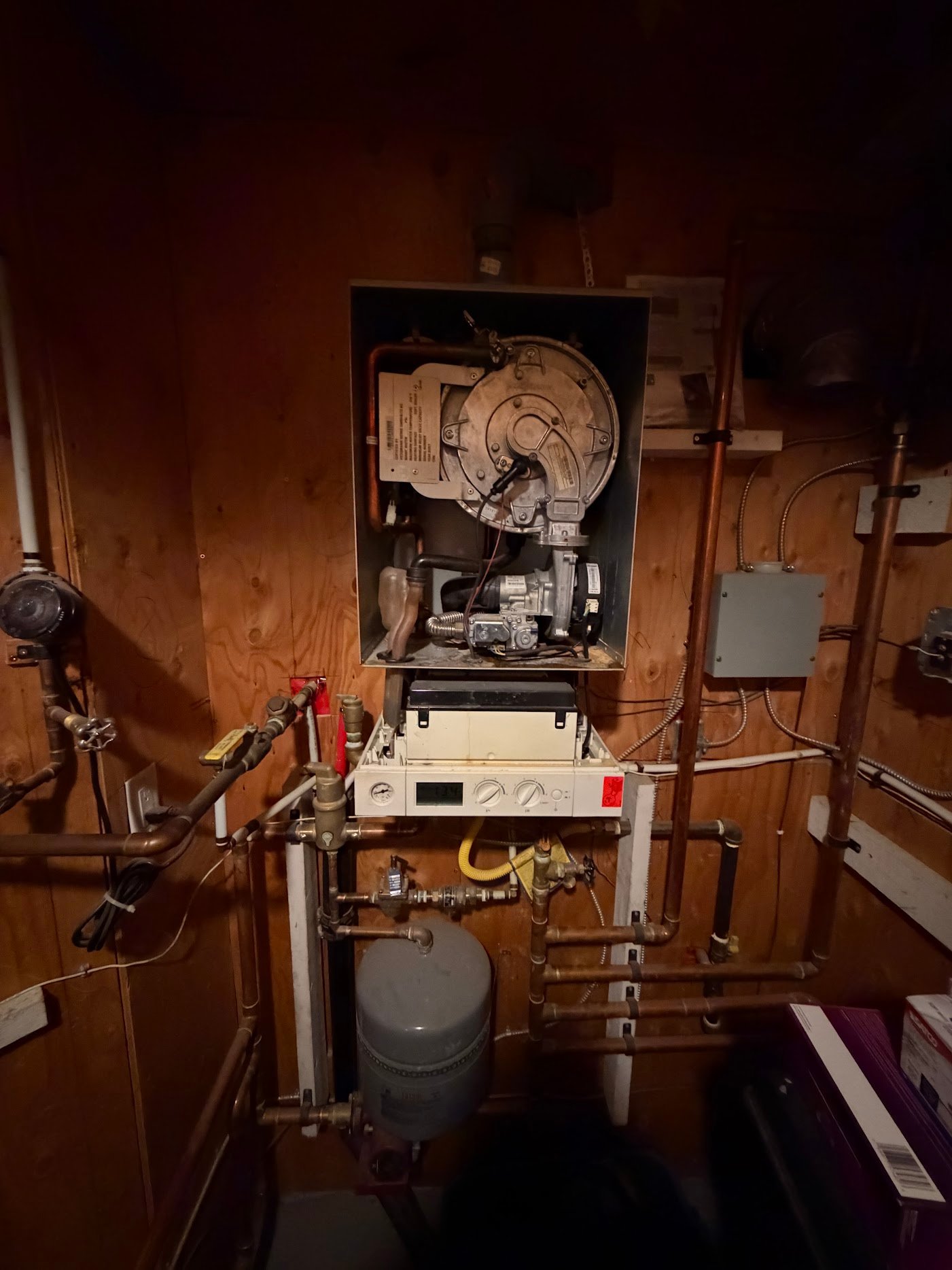
Circulator pumps: match the required flow
A pump moves heating water through a circuit. Keeping it depends on its condition and whether its performance suits the proposed arrangement. A pump that runs is not proof that the boiler and every zone receive the right flow.
Zone valves and controls: keep the room calls clear
Identify which thermostat operates each floor or room group. The installer needs to establish how those calls reach the boiler and how the associated valve or pump responds. If one area already overheats or stays cold, describe that problem before the scope is finalized.
Expansion equipment: check the pressure arrangement
The heating system’s expansion vessel needs to suit the water volume and operating conditions. Include its condition and connection in the assessment. Frequent pressure changes or water discharge deserve investigation; installing a new appliance alone may not address the cause.
System water, debris and air: prepare the existing circuits
The installer should assess cleaning, air removal and water-quality requirements for the selected appliance. The right preparation depends on the existing circuit and the manufacturer’s instructions. A blanket “flush included” statement is less useful than an explanation of the work proposed and why it is needed.
Use these links when comparing the parts section of a quote: circulator pumps, zone valves and controls, expansion equipment and system-water preparation.
Compare Viessmann, Navien and IBC by the model and system fit
Compare the exact appliance and its operating range, rather than choosing a replacement from the brand name alone. Viessmann, Navien and IBC offer options worth discussing during an assessment. Heating output, hot-water duties, approved venting, service access and support for the selected model should guide the comparison.
| Brand or family | Useful distinction | Question to ask about the proposal |
|---|---|---|
| Viessmann Vitodens 100-W | B1HE is a heating boiler; B1KE is a combi version. | Which version matches the tank and hot-water arrangement you want to keep or change? |
| Viessmann Vitodens 200-W | A heating-boiler range with system-control capabilities. | Which controls and accessories does your particular installation need? |
| Navien NHB-H and NCB-H | NHB-H is a heating-boiler range; NCB-H is a combi range. | Does the proposal separate space-heating requirements from domestic hot-water performance? |
| IBC SL series | A heating-boiler family with model-specific output ranges and installation requirements. | How does the selected size operate with your smallest active zone and any indirect tank? |
The Viessmann service and installation guide provides brand-specific context. If you already have a Navien and are weighing repair against replacement, the Navien diagnosis and parts guide explains the fault-assessment approach.
Ask who will service the chosen model and how warranty registration is handled. Confirm equipment availability and written warranty terms before booking. A manufacturer’s parts warranty and an installer’s labour coverage can have different conditions.
Have the full model number ready when you enquire. It helps identify the existing appliance, its connections and the service information needed for a useful replacement discussion.
Maple Ridge neighbourhoods: what to include when you contact us
We take boiler installation enquiries across Maple Ridge, including Albion, Kanaka, Cottonwood, Hammond, Port Haney, Town Centre, Silver Valley, Yennadon, Webster’s Corners, Thornhill, Whonnock and Ruskin. Give us your address and property details when booking so we can confirm the assessment, access arrangements and scheduling for your home.
The City’s neighbourhood directory identifies the main communities and historic areas. For a heating assessment, the useful local detail is how to reach and work on your equipment.
Albion, Kanaka and Cottonwood: mention any renovation, finished space or changed household use that the heating assessment needs to include. Tell us whether the work concerns an existing hydronic system or a new installation.
Hammond, Port Haney and Town Centre: identify the appliance location and the access route. For a townhouse, condo or strata property, confirm who owns the equipment and who can authorize work affecting exterior walls or common property.
Silver Valley and Yennadon: include every heating circuit connected to the appliance. If floor heating, radiators, a tank or another load shares the boiler, the assessment needs the complete arrangement.
Webster’s Corners, Thornhill, Whonnock and Ruskin: tell us the fuel type and any driveway, gate or equipment-room access requirements. The address and actual installation determine the plan; the neighbourhood name does not establish whether a home uses natural gas or propane.
If you are searching for a boiler installer near you, have your neighbourhood, model information and main concern ready. That makes the first conversation more useful than asking for a price without describing the system.
Agree on permits, the shutdown and handover before work starts
A clear installation plan identifies the permit authority, access arrangements, expected service interruption and completion checks. Confirm those responsibilities before the old boiler is disconnected. The work should finish with understandable controls, equipment records and an explanation of the maintenance and warranty requirements that apply to your new system.
Confirm the right permit route for the property
Maple Ridge has delegated authority for qualifying natural-gas work. Other projects can fall under Technical Safety BC, which retains jurisdiction over regulated gases such as propane. The contractor should establish the correct authority for the address, fuel and equipment scope before work begins.
The City’s permit information and TSBC’s jurisdiction guidance are the starting points. Strata or owner approval is a separate requirement where applicable.
Make the interruption plan specific
Ask when heating will be unavailable and whether domestic hot water is affected too. A separate water heater and an indirect tank connected to the boiler can lead to different shutdown arrangements. Equipment availability, vent changes and additional repairs can also affect timing.
Walk through the finished system
Ask what was checked for combustion, circulation, pressure, drainage and control operation in line with the appliance instructions. Confirm that the relevant zones and hot-water functions were included in commissioning. Have the installer explain the controls you use day to day and the information to record if a fault appears.
Keep the model details, installation record and warranty information together. Plan future boiler service in Maple Ridge around the manufacturer’s requirements and the system’s condition.
Bring us the comfort problem, and we can plan the replacement around it
Request an assessment with your Maple Ridge address, boiler model and a short description of what needs to improve. Mention uneven heating, frequent faults, a planned renovation or changing hot-water use. These details help us assess the existing system and explain a replacement scope that addresses your priorities.
Have a clear equipment photo, a model-label photo and a wider view of accessible pipework ready. Include any separate tank or heating manifold. You do not need to open the appliance to start the conversation.
Whether your priority is keeping working radiators, reducing repeated interruptions or updating an awkward equipment layout, the first step is to establish what the job needs to cover.
Call 778-798-4343 · Request an assessment online
You can also read the boiler installation overview for the wider service scope.
Questions Maple Ridge homeowners can settle before choosing a boiler
The right questions reveal whether a proposed replacement suits your existing heating system. Clarify what stays, how the new controls will operate and why any added components are needed. These answers help you prepare for the assessment and compare the installation scope with the comfort improvements you expect.
Can I keep hydronic baseboard heaters with a new condensing boiler?
Often, yes. Their condition, heat output at the proposed water temperatures and circulation need assessment. Keeping the baseboards does not mean reusing every pump or control. Ask the installer to identify any changes needed to make the existing emitters work with the selected boiler.
Why does the installer need to know about new windows or insulation?
Those upgrades can reduce the heat the building loses. A boiler selected only from the old appliance’s rating may no longer be a good fit. Include recent changes and any planned work so the heating calculation reflects the home the new system will serve.
Does every replacement need a buffer tank?
No. A buffer tank can be considered when system design calls for added water volume or better management of small loads. Its need depends on the boiler’s minimum output, active zones, water volume and control strategy. Ask for the reason it is included rather than treating it as a standard accessory.
Is something wrong if the radiators feel less hot with outdoor reset?
Not necessarily. The system may be supplying lower-temperature water because the house needs less heat. Room comfort is more useful than touching a radiator. If rooms fail to reach the set temperature, record the conditions and have the installer check the control setup and heat delivery.
Does a Wi-Fi thermostat control the boiler’s outdoor reset?
Wi-Fi access alone does not establish that capability. The thermostat may simply send a heating call while the boiler manages its water temperature separately. Compatibility, wiring and control configuration are model-specific. Ask the installer to explain what the proposed thermostat will control before buying one.
Who handles the permit if my Maple Ridge home uses propane?
Technical Safety BC retains jurisdiction over propane gas work. The contractor should confirm the permit and assessment requirements for your project and identify any separate municipal requirements. The process should be established before installation; a natural-gas permit assumption may not apply to a propane system.
Can the boiler be moved to free up storage space?
Possibly, but the new location must suit the appliance’s installation and service requirements. The assessment needs to cover venting, gas supply, drainage, piping, electrical connections and access. Ask for relocation work and any wall or finish repairs to be priced explicitly.
What if one heating circuit still performs poorly after replacement?
Report which circuit is affected and when the problem occurs. The cause may involve flow, a valve, a thermostat or the circuit’s heat output. Ask how existing comfort complaints will be assessed and included in commissioning before approving the job, so both parties understand the agreed scope.